
Buyer's guides
The 6 Best RV Monitoring Systems of 2026 (Compared by What Actually Fails)

Here's the scenario every RV monitoring system exists for: you're out to dinner, your dog is asleep in the rig, and the campground pedestal drops power. Nothing announces it. If you have an inverter, it takes over silently — the lights stay on, the AC dies, and the interior starts climbing toward outside-plus-20°F. On a summer afternoon, an RV can get dangerously hot in under an hour.
A monitoring system's whole job is to make sure you find out in time. And that's exactly where most of them have a weak spot — because an alert that depends on campground WiFi, a single cell carrier, or a subscription that lapsed is an alert that might not come.
We compared the six most popular ways RVers solve this in 2026 — five commercial systems plus the DIY route — on specs, plans, and, more importantly, several hundred owner reports from iRV2, Forest River Forums, and RV Facebook groups, paying special attention to how each one fails. Because with this product category, the failure mode is the review.
The short version:
- Best if you refuse to pay a subscription: Temp Stick
- Best-known pet monitor (with real caveats): Waggle
- Best cellular reliability for the money: MarCELL
- Best whole-RV coverage (temp + power + doors + tanks): RV Whisper
- Best newcomer: Necto
- Best for tinkerers (and the most capable, if you build it): DIY with Home Assistant
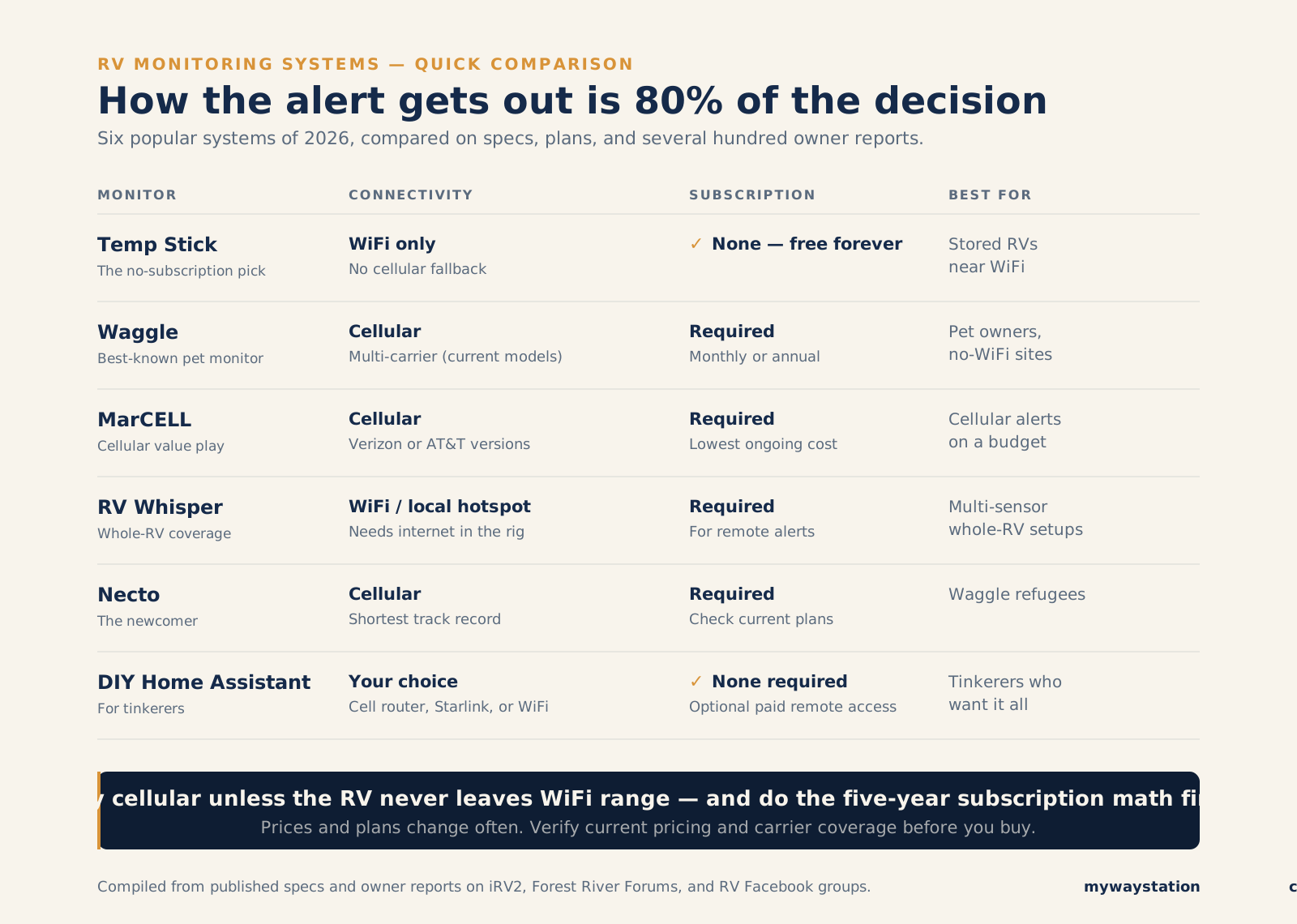
The six systems at a glance — connectivity, subscription, and who each one fits. Full details in the table below.
Quick comparison
| Connectivity | Subscription | Battery backup | Best for | |
|---|---|---|---|---|
| Temp Stick | WiFi only | None | 2x AA, 1+ year claimed | Stored RVs near WiFi |
| Waggle | Cellular (current models multi-carrier AT&T/Verizon/T-Mobile; older units Verizon-only) | $24.99/mo, $16.58/mo billed annually, or ~$12/mo on a 2-year plan | ~1 day in default mode (claims up to 96h) | Pet owners, no-WiFi sites |
| MarCELL | Cellular (Verizon or AT&T versions) | $8.25–$24.95/mo by device and billing term | ~2 days | Cellular alerts on a budget |
| RV Whisper | WiFi only (2.4 GHz) | Cloud plan — first year included, annual renewal after | Wall-powered hub | Multi-sensor whole-RV setups |
| Necto | Cellular (multi-network SIM) | 1–2 years bundled with device; renews from $4.99/mo | 72 hours claimed | Waggle refugees |
| DIY Home Assistant | Your choice (cellular router, Starlink, WiFi) | None required (optional $6.50/mo remote access) | Depends on your build | Tinkerers who want it all |
1. Temp Stick — best no-subscription option
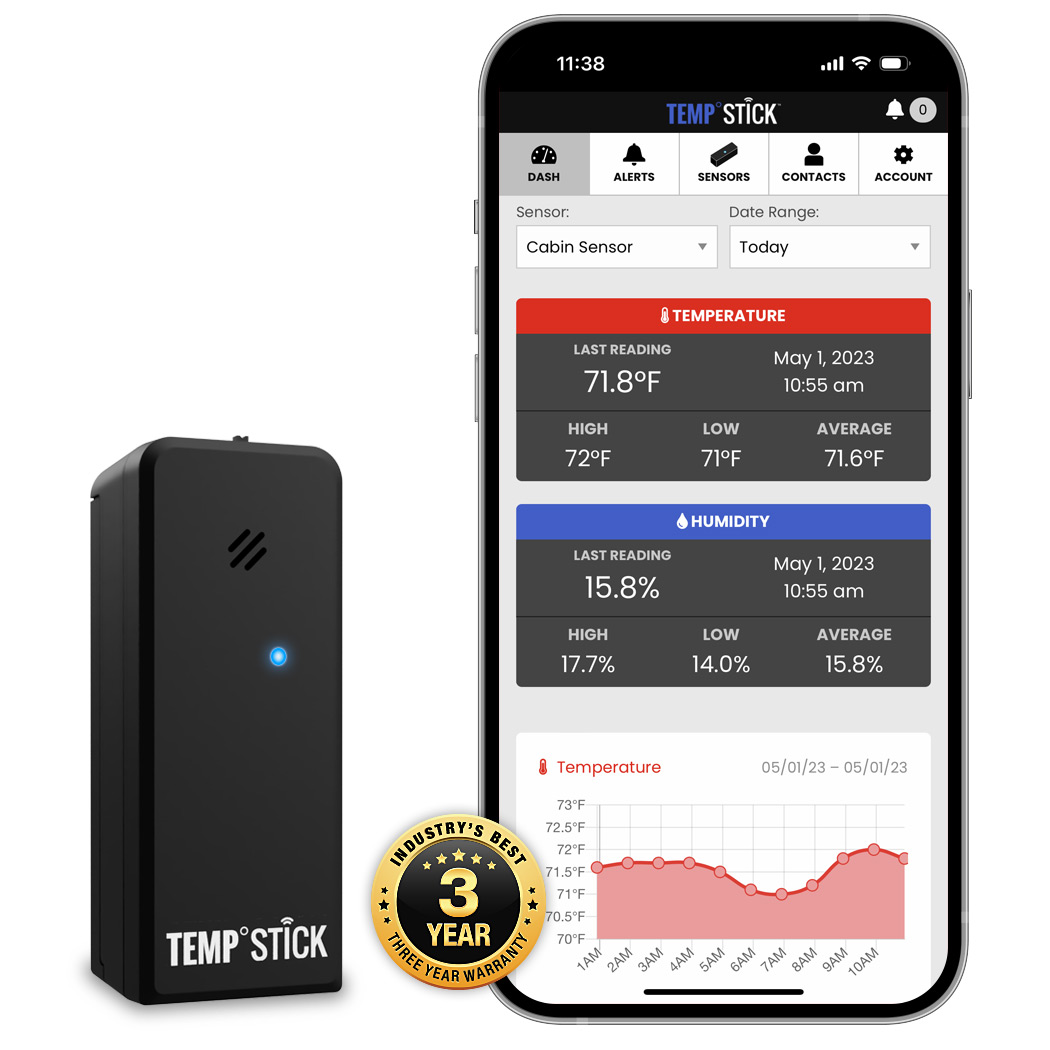
Image: Temp Stick (Ideal Sciences), https://tempstick.com
The Temp Stick is the answer to the single most common complaint in this category: subscription fatigue. You buy the sensor once ($139 direct), and temperature/humidity alerts by app, text, and email are free forever — "no fees, no subscriptions" is the company's own headline promise. Owners consistently praise the US-based support, and it runs on two AA batteries with a claimed year-plus of life — no wiring.
The catch is the connectivity model, and it's a big one: Temp Stick is WiFi-only. If your RV is stored at home inside router range, or parked at a campground with genuinely reliable WiFi (rarer than campground brochures suggest), it's excellent. If you boondock, or your storage lot has no internet, it is — bluntly — a paperweight. There's no cellular fallback, and no alert can escape an RV with no connection.
Get it if: your rig lives within reach of WiFi you control. Skip it if: you boondock or store the RV off-grid. No connection, no alerts — full stop.
2. Waggle — the best-known pet monitor, with caveats you should hear first
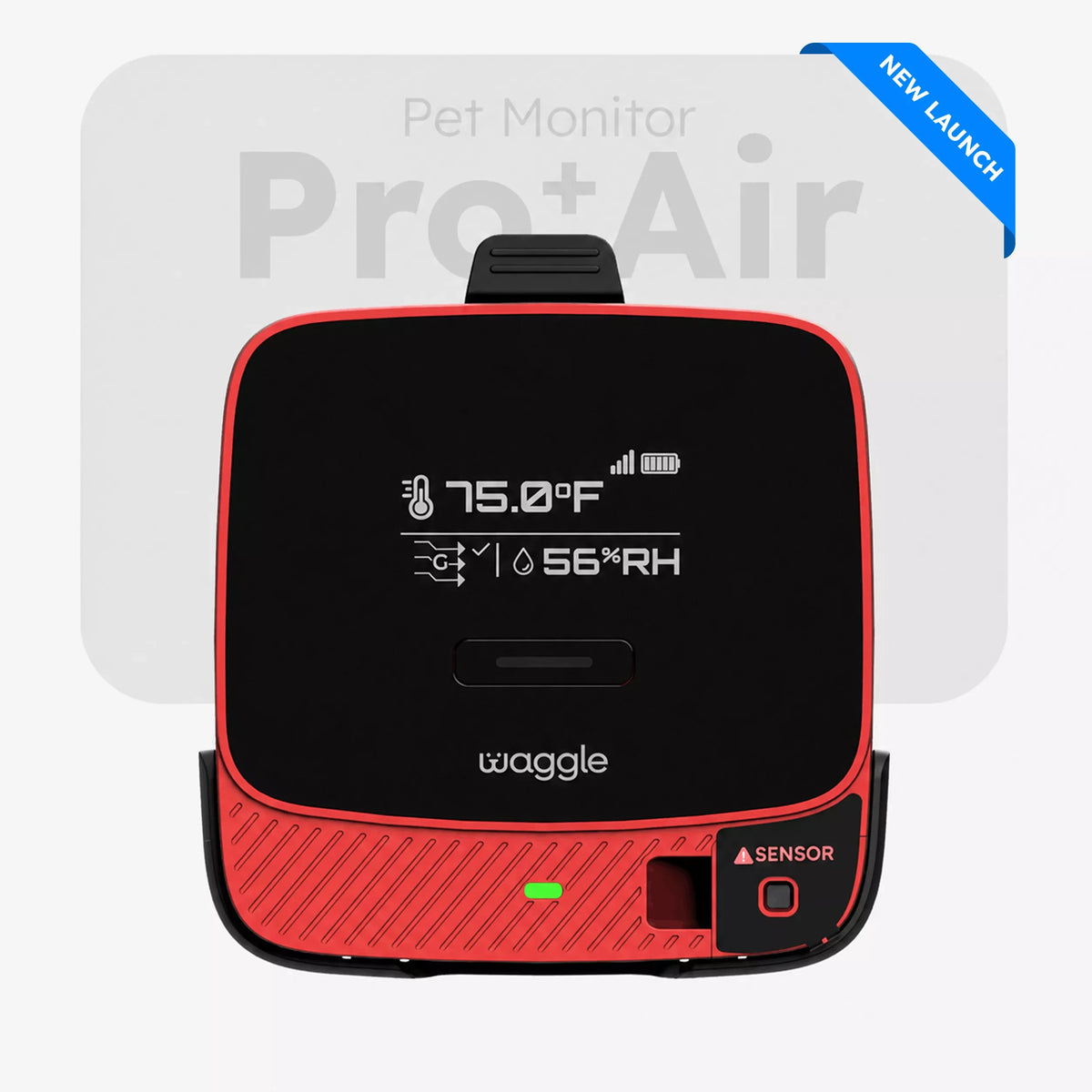
Image: Waggle, https://mywaggle.com
Waggle (formerly RV PetSafety) built this category, and if you search "RV pet monitor," it's the brand you'll find. The pitch is right: cellular-connected temperature monitoring that doesn't care about campground WiFi, designed around pet safety, with alerts to your phone when the interior leaves your set range.
But Waggle also generates more documented owner complaints than anything else we compared, and you should read them before buying:
- Temperature accuracy. Multiple owner reports describe readings off by margins that matter — in a product whose entire job is a number, that's the complaint to take most seriously.
- Alert reliability. Scattered but recurring reports of heat alerts arriving late or not at all, including from reviewers who tested it deliberately. The same July 2026 one-star reviewer reports a device that "drops … constantly and needs a 'reboot.'"
- Subscription structure. The plan runs $24.99/mo month-to-month, $199/year ($16.58/mo) billed annually, or $299 every two years (~$12/mo). Owners who camp a few weeks a year have long resented paying year-round — one Amazon review title (★☆☆☆☆, July 2026) says the quiet part: "Do not purchase if not Full Time RV!" To its credit, Waggle now sells a "Flexi" plan aimed at exactly this complaint — $119 for a six-month term with two pauses.
- Carrier coverage. Older Waggle units (the Lite and PRO) rode Verizon's network exclusively — Waggle's own support FAQ still describes them as Verizon 4G-CatM1 devices — and owners in weak-Verizon areas reported devices dropping offline, including replacement units, because the problem was the tower, not the device. The current Pet Monitor generation (Lite+, $99, and Pro+ Air, $169) fixes this with a multi-carrier SIM that auto-switches between AT&T, Verizon, and T-Mobile. Just make sure you're buying current-generation hardware, not old stock.
- Real-world battery life shorter than the marketing suggests. The headline claim on current models is "up to 96 hours," but Waggle's own support docs are more candid: about 24 hours in the default 10-minute reporting mode, with multi-day life only in an ultra-low-power mode that reports once an hour.
None of this makes Waggle a bad product — thousands of RVers rely on it daily, the app ecosystem is mature, and cellular is the right architecture for RV life. But "the one everyone's heard of" and "the best one" aren't automatically the same product.
Get it if: you want the most established pet-focused option and current-generation (multi-carrier) hardware. Skip it if: the monthly cost grates, or you're tempted by a deal on older Verizon-only stock. Read on.
3. MarCELL — cellular alerts without the premium subscription
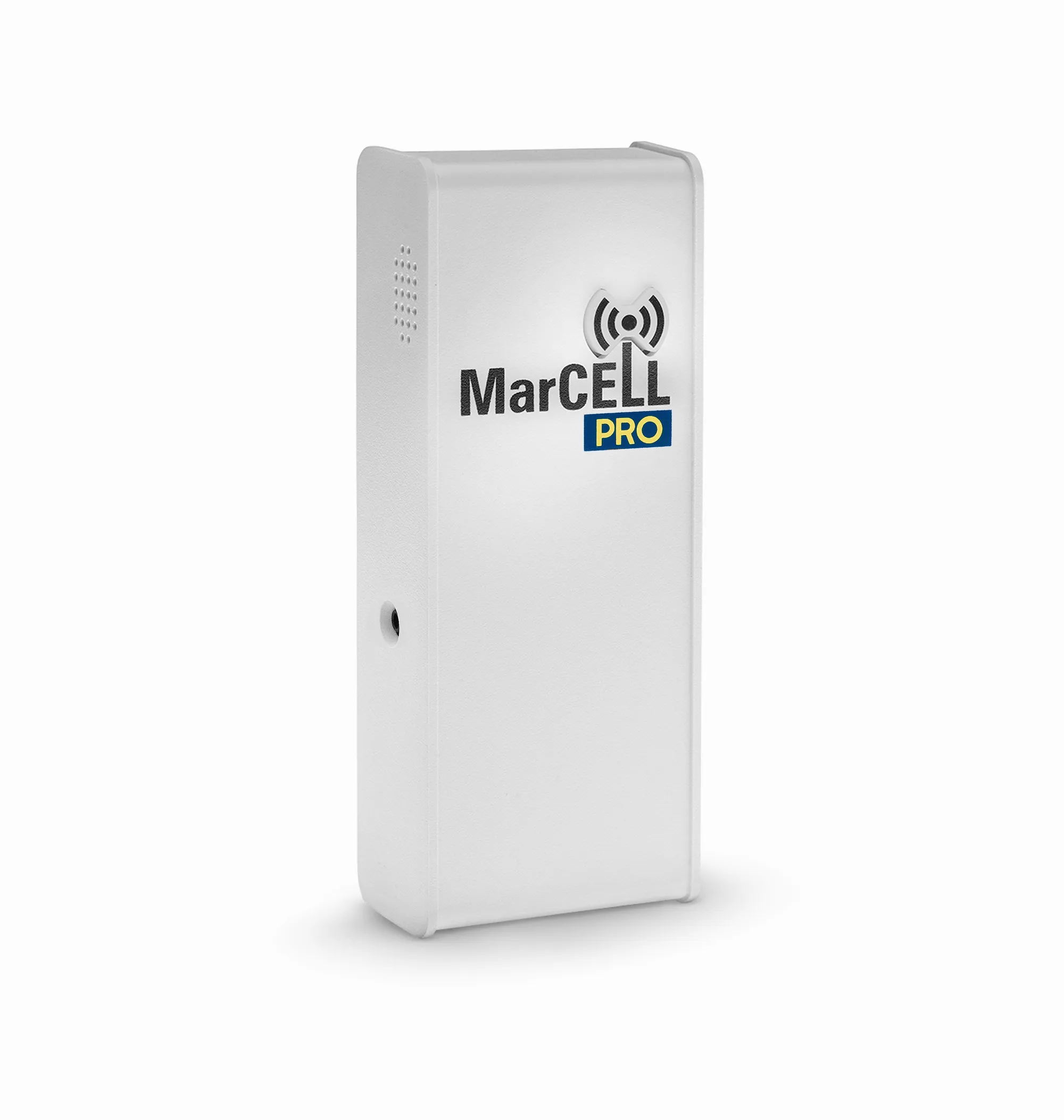
Image: MarCELL, https://meetmarcell.com
MarCELL is the value play in cellular monitoring. Same fundamental architecture as Waggle — a cellular radio that doesn't depend on campground internet — at a friendlier monthly price: the base MarCELL runs $8.25/mo billed annually ($11.95 seasonal, $14.95 month-to-month), while the PRO tier is $14.95/mo annual or $24.95 monthly. It monitors temperature, humidity, and power loss, with a battery that keeps reporting for about two days after an outage.
Two details we particularly like: MarCELL sells separate Verizon and AT&T versions, so you can match the device to whichever network actually covers where you camp. And its power-loss alerting is first-class, which matters because power loss (not heat itself) is usually the first domino in the pet-danger scenario. Heat alerts tell you the RV is already hot; power alerts tell you it's about to get hot. That early warning is sometimes the whole ballgame. And the alerting earns its keep in the field either way: one five-star Amazon reviewer (May 2026) credits a MarCELL temperature alert that arrived with enough time to fix the problem before her Yorkie was harmed.
The tradeoffs: the app and hardware are more utilitarian than Waggle's, and it's a monitoring device, not a pet-lifestyle product — no camera tricks, no frills. And know the alert model going in: on-demand "instant updates" aren't included in the plans at all — MarCELL's FAQ prices them at $0.25 apiece, sold in $2 packs of eight (they never expire). Scheduled reporting and threshold alerts are the product; unlimited on-demand checking is not.
Get it if: you want dependable cellular alerts at the lowest ongoing cost, or you need AT&T coverage. Skip it if: you want a polished pet-centric app experience or multi-sensor expansion.
4. RV Whisper — the whole-RV nerd option
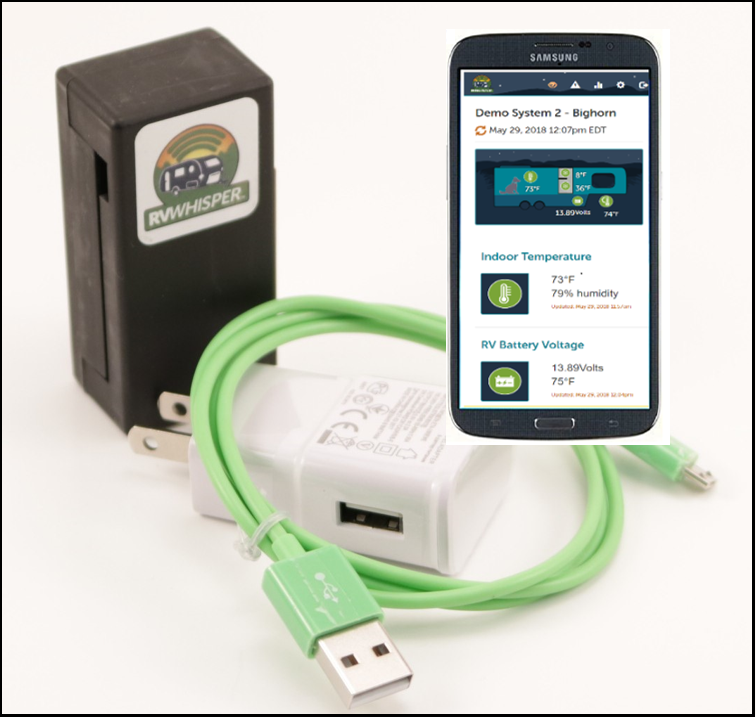
Image: RV Whisper, https://rvwhisper.com
Everything above watches temperature. RV Whisper watches the RV: one hub supporting a family of sensors — temperature, doors, battery voltage, leaks, even tank levels — with everything in one dashboard. It's the closest thing on this list to a true whole-RV monitoring system, and power users pair it with devices like the Hughes Power Watchdog for shore-power alerting, which is otherwise the great unsolved problem in this category. (More on that in our shore-power guide.)
The architectural catch is connectivity: RV Whisper's hub is WiFi-only (2.4 GHz — no cellular option), so it needs an internet connection already present to get alerts off the rig — your hotspot, Starlink, or campground WiFi. A cloud-services plan handles remote access and text/email alerts; the first year comes with the hub and it renews annually after that (technically optional, but the alternative is configuring your own dynamic DNS, port forwarding, and email relay). If you already run always-on internet in your RV, that's fine. If you don't — particularly for a rig sitting in storage — you're back to the Temp Stick problem: the sensors see everything and can't tell you.
Get it if: you want one system watching everything and you already keep internet in the rig. Skip it if: you want zero-setup simplicity, or the RV sits somewhere with no connection.
5. Necto — the newcomer eating Waggle's complaints
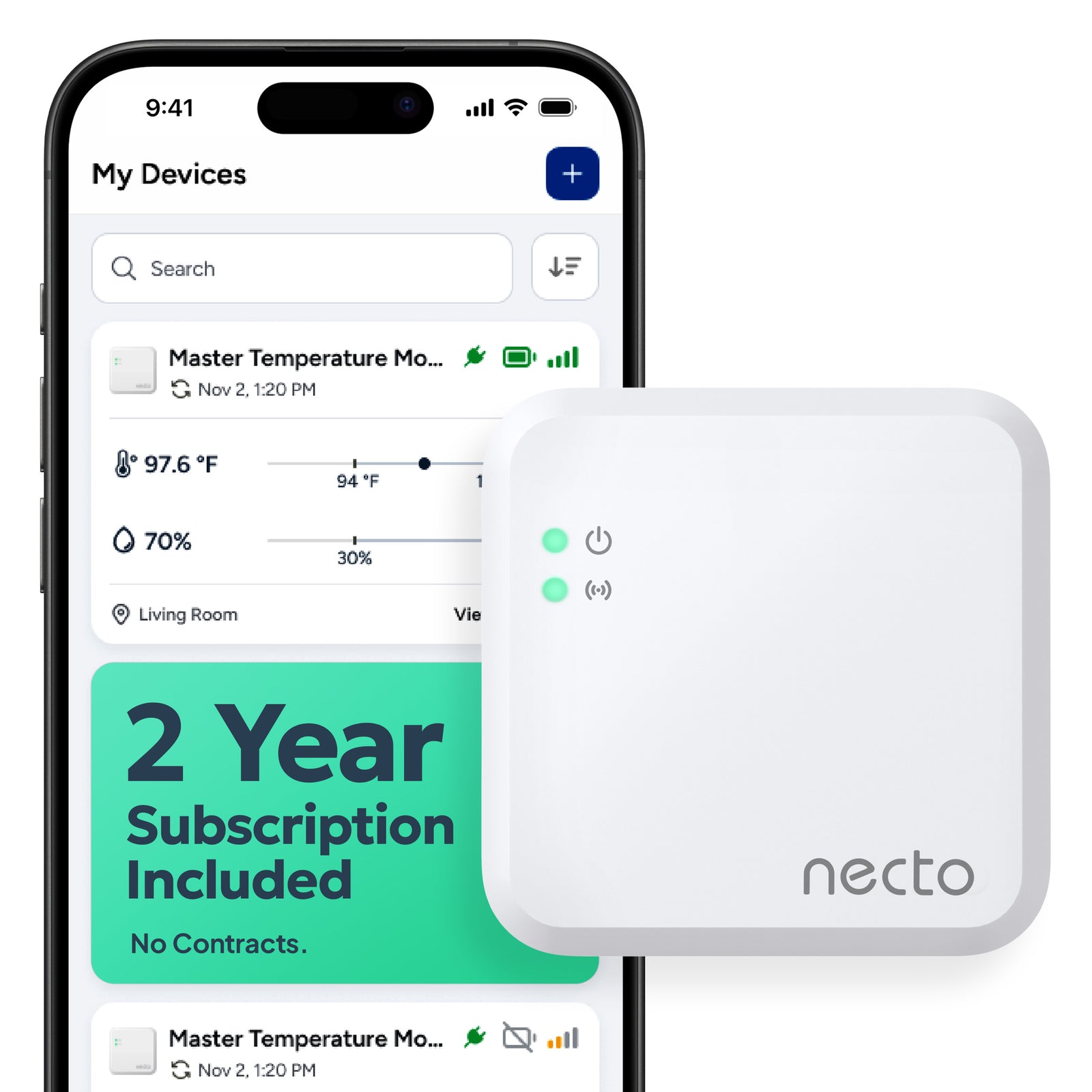
Image: Necto, https://getnecto.com
Necto is the newest name here, and it's clearly been designed as a point-by-point answer to the Waggle complaint list: a multi-network 4G SIM that auto-selects the strongest available carrier, a claimed 72-hour backup battery, and a subscription model that inverts Waggle's — the first one or two years come bundled with the device ($139.99 with one year included, $199.99 with two), and after that renewal runs $9.99/mo month-to-month, $6.99/mo billed annually, or $4.99/mo billed every two years. Independent reviewers have started ranking it above Waggle, and the early-owner sentiment is good.
The honest caveat is track record. Waggle's flaws are known — documented across years of forum threads. Necto hasn't been in enough rigs for long enough to know its failure modes yet, and in a product you buy specifically for the worst day, maturity counts for something. A company that's been shipping alerts for years has proven its servers stay up in August.
Get it if: you want current-generation hardware and pricing, and you're comfortable being an earlyish adopter. Skip it if: you want the longest possible paper trail — that's MarCELL or Waggle.
6. DIY with Home Assistant — the most capable option, if you're willing to build it
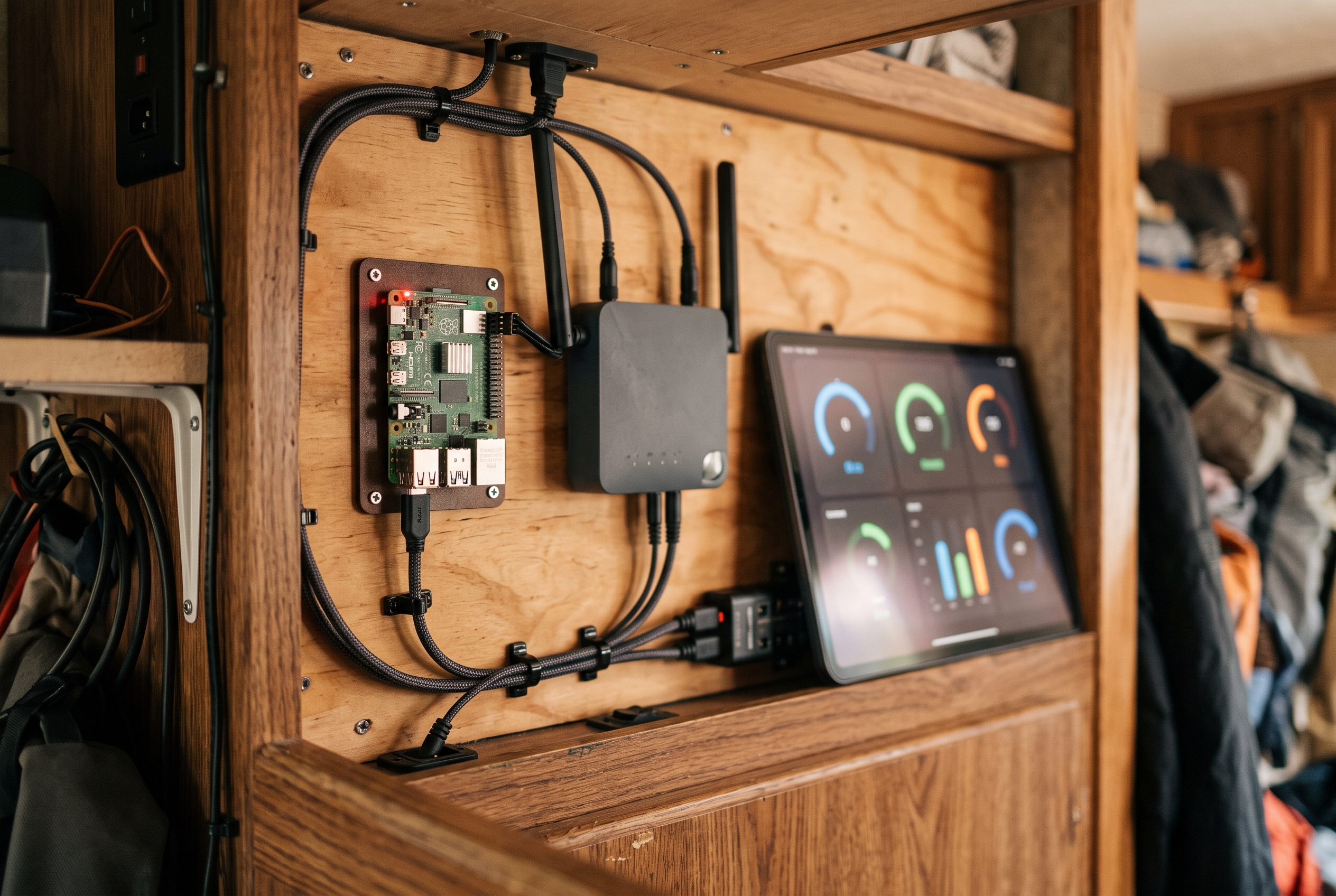
Every commercial product above makes your choices for you — which sensors, which carrier, which alerts, which subscription. The DIY route flips that: a small computer (a Raspberry Pi or mini-PC, ~$100–150) running the free, open-source Home Assistant, plus whichever sensors you actually want. Zigbee temperature and leak sensors for a few dollars each, Bluetooth integrations for gear you may already own — Victron battery monitors, Mopeka tank sensors — door sensors, cameras, power monitoring. One dashboard, alerts exactly how you want them, and no monthly fee for the monitoring itself.
Honestly assessed, this is the most capable system on this list. It's also the only one where you are the support department. The failure modes are yours to own: the integration you misconfigured, the automation that silently stopped, the Pi that didn't come back after a power blip. And the connectivity problem doesn't disappear — alerts still need a way off the rig, which means a cellular router or Starlink while camping (or pairing with home WiFi in the driveway), plus either a free VPN like Tailscale or Home Assistant's $6.50/mo (or $65/yr) Nabu Casa cloud service for easy remote access. Budget a weekend for the initial build and expect ongoing tinkering — which, for a certain kind of RVer, is the fun part.
We're writing a full step-by-step build guide — parts list, sensor picks, and the exact automations for the pet-safety and storage scenarios: How to Build a Smart RV with Home Assistant →
Get it if: you enjoy this stuff, want capabilities no commercial product offers, and accept that reliability is on you. Skip it if: you want to open a box, plug it in, and trust it — that's everything else on this list.
How to actually choose: the three questions that matter
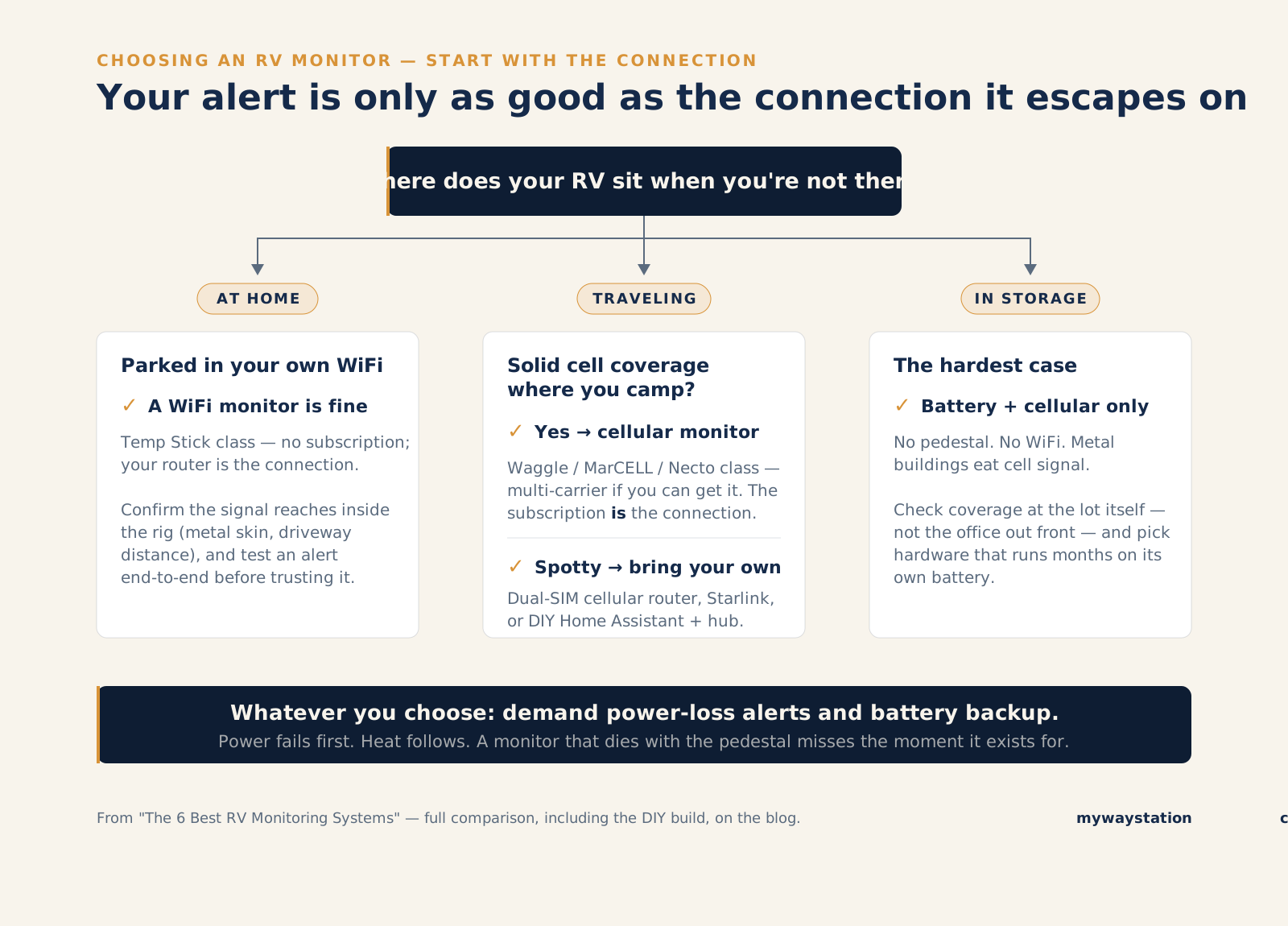
Start with where the RV sits when you're not there — the connection decides which class of monitor can work at all.
1. What connection does the alert escape on? This is 80% of the decision. WiFi devices (Temp Stick, RV Whisper) are only as good as the internet where the RV sits — not where you are. Cellular devices (Waggle, MarCELL, Necto) work almost anywhere but marry you to a carrier's coverage map, so check that map for your actual storage lot and favorite campgrounds before buying, not after. And if you run Starlink: it solves monitoring while camping, but not for a rig in storage with systems powered down.
2. What happens when power fails? Power loss is the most likely emergency and it also disables half the gear in your rig. A monitor with no battery backup dies at the exact moment it matters. Look for real-world backup time (owner reports, not spec sheets) and — ideally — an explicit power-loss alert, not just temperature.
3. What's the five-year cost? A $99 device at $24.99/mo costs about $1,600 over five years. A $139 no-subscription device costs $139. Subscriptions buy you the cellular connection, so they're not a scam — but do the math on your actual timeline before the checkout page does it for you.
FAQ
Do RV temperature monitors work without WiFi? Cellular models (Waggle, MarCELL, Necto) do — they carry their own connection and this is exactly what they're for. WiFi-only models (Temp Stick) don't. This single distinction should be the first filter you apply.
Waggle vs MarCELL — which is better? Waggle has the more polished pet-focused app, and its current models are multi-carrier (older units were Verizon-only); MarCELL costs less monthly ($8.25/mo annual vs. Waggle's $16.58/mo) and has stronger power-loss alerting, with your choice of a Verizon or AT&T version. For pure "is my pet safe" monitoring on a budget, we lean MarCELL; with budget to spare, Waggle's ecosystem is nicer to live with.
Is there an RV monitor with no monthly fee? Temp Stick is the standout — free alerts forever, but WiFi-only. A DIY Home Assistant build also has no required subscription. Every no-subscription option depends on the RV having internet some other way; with commercial products, the subscription is the cellular connection.
Can I build my own RV monitoring system? Yes — Home Assistant on a Raspberry Pi with cheap Zigbee/Bluetooth sensors is the established DIY route, and it's more capable than any commercial product here. The tradeoffs are setup time, supplying your own connectivity, and being your own tech support. See #6 above, and our full build guide.
How fast does an RV heat up when the AC fails? Interior temperatures can reach dangerous levels for pets in well under an hour on a hot day — often 20°F+ above the outside temperature. That's why power-loss alerts beat temperature alerts: they fire before the heat builds, not after. Full heat-timeline data is in our pet safety guide.
Can I check on my RV in storage with these? Only if the device has a connection at the storage lot: a cellular monitor with carrier coverage there, or WiFi if the facility offers it (verify — most don't). Battery devices like Temp Stick last months between charges; wall-powered hubs need shore power or a maintained house battery. More in our storage monitoring guide.
Bottom line
If we had to give one-line advice: buy cellular unless your RV never leaves WiFi range, prioritize power-loss alerting over temperature alerting, and do the five-year subscription math before falling in love with an app. Temp Stick wins for stored-at-home rigs, MarCELL is the sensible cellular default, and Waggle remains the category's household name — as long as you go in knowing its weak spots.
The uncomfortable truth about this whole category is that every product on this list makes you choose between connectivity, coverage, cost, and completeness. Nobody has built the one that doesn't. Yet.
[Disclosure placeholder: once Waystation launches, add — "We're building an RV monitoring product ourselves, which is exactly why we know this category's failure modes. This comparison reflects owner reports and published specs; we've marked every place our judgment could be biased."]
Stay in the loop
Occasional updates from the road and the workbench — what we're learning, what we're building. No spam, easy out.
Draft preview — this form connects to the email service at launch.