
Safety
RV Propane Detectors: Why Yours Keeps Going Off (and What Actually Sets It Off Besides Propane)

It's 3am. The propane detector is shrieking. You stumble out of bed, nose to the floor, sniffing for rotten eggs — nothing. You air out the rig, the alarm resets, you go back to bed. Two nights later it does it again.
If that's you, welcome to one of the most-documented rituals in RV ownership. Forum archives at iRV2, Forest River Forums, and every owners' group in between hold the same thread, posted over and over for fifteen years — the titles alone tell the story: "Propane detector goes off in the early AM", "What else beside Propane will set off the detector?". It happens to brand-new rigs, too: one r/RVLiving owner reported their 2024 fifth wheel's detector firing at 5am twice — no leak found, with the leading suspect being the cat's litter box schedule. (Not as silly as it sounds; hold that thought for cause #5.) The good news: it's almost always one of eight knowable causes — most of which aren't propane.
One caveat before the list: a propane detector alarm is real until you've proven otherwise. Propane leaks kill people, and the entire reason your detector is twitchy is that it's designed to err loud. So we start there.
First: how to tell a false alarm from a real leak
You smell gas — or you're not sure
Rotten eggs or skunk, especially low near the floor (propane pools). No switches, no flames: everyone out, windows open on the way, tank valve off unless the leak is at the tank itself, report it from a safe distance. Full steps below.
No smell, no appliance running — but verify
Do the soap-bubble test: dish soap and water brushed on every fitting with the tank valve on. Growing bubbles = leak. No bubbles, no smell? Now you may be annoyed instead of alarmed — see the eight usual suspects below.
Propane is odorless on its own; the ethyl mercaptan added at the plant makes it smell like rotten eggs or a skunk convention. Your nose is a legitimate second sensor — use it low, because propane is heavier than air and pools at the floor (more on that below).
If the alarm sounds and you smell gas — or you're not sure — treat it as real. Right now:
- Don't flip switches or light anything. No lights on or off, no fans, no phones inside. A switch can spark.
- Get everyone out — people and pets.
- Open the door and windows on your way out, and leave them open.
- Shut off the propane at the tank — valve clockwise — unless the smell or hiss is at the tank itself, in which case stay clear of it.
- Report it from a safe distance. If gas keeps flowing, you smell it strongly, or you're unsure, call 911 or the fire department, then your propane supplier.
- Stay out until the alarm stops and the smell is gone. If you can't find and fix the cause, get a technician to pressure-test the system before you use propane again.
If there's no smell and no appliance was running, you're probably in false-alarm territory — but verify before you shrug. The classic DIY check is the soap-bubble test: mix dish soap and water, brush it onto every propane fitting you can access (tank connections, regulator, appliance connections behind the fridge and water heater) with the tank valve on. Bubbles growing at a fitting = leak. No bubbles, no smell, appliances off? Now you're allowed to read on slightly annoyed instead of alarmed.
Experienced owners add a third tool to the triage kit: a cheap handheld propane "sniffer" (a portable combustible-gas leak detector) kept on board to independently verify what the wall unit is claiming — a tip from u/Laina_rg on r/RVLiving that turns a 3am guessing game into a two-minute check.
Note that many RVs have a combined LP/CO unit, and carbon monoxide is a different problem with different sources — covered in our RV carbon monoxide detector guide.
The 8 things that set off an RV propane detector besides propane
RV propane detectors are, by design, not picky. Most use a metal-oxide semiconductor sensor that reacts to a whole family of combustible gases and hydrocarbon vapors — propane, sure, but also methane, hydrogen, butane, alcohol vapors, and solvents. That promiscuity is a feature (it fails toward caution) and also the entire reason this article exists. Here's the false-alarm lineup, roughly in order of how often it shows up in owner reports.
1. The detector is old and telling you it's dying
This is the number-one answer in the forum threads, and the one most people check last. RV propane detectors are listed to the UL 1484 standard, and the sensors inside have a hard service life — 5 years on the common Safe-T-Alert and RVSafe units. At end-of-life, the unit is designed by the manufacturer to chirp or flash an error code no matter what's in the air — it can't be recalibrated or sweet-talked, only briefly snoozed (Safe-T-Alert allows 72-hour resets for up to 30 days, and then the signal locks in until you replace the unit). An aging sensor also gets progressively more sensitive on its way out, which is why a six-year-old detector suddenly starts objecting to things it ignored for years.
Check the date first. It's printed on the face or back of the unit; on Safe-T-Alert models the 5 years run from the installation date, not manufacture — MTI's manuals have you record the install date and replace within 5 years of it, and the printed replace-by date is the backstop. If your detector is past its date — or you have no idea because it came with the rig — stop troubleshooting and replace it. An expired sensor is unreliable in both directions, and the direction that doesn't wake you at 3am is the one that matters.
2. Low or unstable 12V battery voltage
Your propane detector runs on the RV's 12V house system, and it does not appreciate sagging power. Safe-T-Alert's manuals say the units operate normally down to about 8 volts; below that, low voltage trips a malfunction alarm — an alternating red/green LED with a beep every 15–30 seconds — that owners routinely mistake for a gas alert. And a battery bank that reads fine at rest can dip below that floor for a moment every time the furnace blower kicks on.
And here's the answer to the eternal "why always at 3am?" question: overnight is when your battery is at its lowest. The furnace fan has been cycling for hours, nothing is charging, and at the coldest point of the night the voltage dips below the detector's happy place. It's not haunted. It's undercharged.
If your alarm only sounds while boondocking, when the furnace runs hard, or shortly after shore power drops, check your battery voltage before blaming the detector. (Losing shore power quietly is its own problem — see our guide to shore power loss alerts.)
3. Hydrogen off-gassing from your batteries
The mirror image of #2: too much charging. Lead-acid batteries — flooded especially, though owners report it with AGM too — release hydrogen gas while charging, particularly held at float or overcharged. Hydrogen is a combustible gas, the sensor reacts to combustible gases, and so a battery bank quietly gassing in a poorly vented compartment sets off the propane alarm with not a molecule of propane in sight.
Owner reports flag this most where batteries live inside or under the living space, and in setups where solar tops the batteries while the converter also floats them. If your alarms coincide with sunny afternoons on shore power, or the battery compartment smells faintly sharp, this is a prime suspect. Fix the venting and the charging profile, not the detector.
4. Aerosols, hairspray, and cleaning products
Hairspray is the celebrity offender — one blast near the floor-mounted detector and the whole campground knows — but the category is broad: sunscreen spray, deodorant, air fresheners, disinfectants, degreasers, insect repellent. Aerosol propellants and solvents are exactly the hydrocarbon vapors the sensor is built to notice.
A special warning: silicone-containing sprays (many hair products, some lubricants) don't just trigger metal-oxide sensors — they can permanently degrade them. MTI's manuals warn against spraying cleaning agents or waxes anywhere near the unit because it "may damage the sensor," and sensor-industry research documents siloxane exposure coating metal-oxide sensors so they lose sensitivity to real gas while false-alarming more on everything else. A detector that got hairsprayed weekly for a season may now be a false-alarm machine that needs replacing regardless.
5. Off-gassing from new materials — carpet, adhesives, even pet food
New and freshly renovated RVs are little VOC bubbles: carpet, flooring, adhesives, sealants, and cabinetry all off-gas volatile organic compounds for weeks, and owners of brand-new rigs report mystery alarms that fade as the rig airs out. The same goes for things you bring in: oil-based paints, solvent-cleaned parts, and — a recurring forum finding that sounds fake but isn't — a freshly opened bag of pet food parked next to the detector.
6. Heat, humidity, and condensation
Metal-oxide sensors drift with their environment. High humidity, big temperature swings, and condensation — coastal camping, rainy weeks, a rig that bakes all afternoon and chills all night — can push a sensor (especially an aging one) into nuisance territory. If your alarms cluster around weather rather than activity, suspect this.
7. Dust, pet hair, and general floor-level grime
The detector lives at ankle height, which is also where dust bunnies and pet hair migrate. A clogged sensor grille reads badly and false-alarms more. The fix costs nothing: vacuum the detector face gently every few weeks — brush attachment, no sprays, no cleaning products (see #4; yes, people set off the detector while cleaning the detector).
8. Dog flatulence. Genuinely.
We saved the best-documented for last. Search any RV forum for "dog" plus "propane alarm" and you'll find years of testimony: the 80-pound Lab who sleeps with his hindquarters against the detector and reliably triggers a 30-second alarm; the dog who got sausage for dinner and "broke wind with amplitude" next to a Leisure Travel Van's sensor; the owner who noted the false alarms stopped, sadly, when the dog passed on.
It's not a joke defect — it's chemistry. Dog (and, to be fair, human) flatulence contains methane and hydrogen, both squarely within the detector's range, delivered warm at exactly floor level, exactly where the detector lives. The detector is doing its job with complete sincerity. The fix is to relocate the dog bed, not the detector — which brings us to why the detector is down there in the first place.

Why RV propane detectors are mounted low
Propane is roughly 1.5 times heavier than air, so leaked propane doesn't disperse upward like natural gas — it sinks, pools along the floor, and fills the space from the bottom up like water. That's why NFPA 1192 requires every RV with a propane appliance to carry a propane detector listed to UL 1484 and installed per the terms of its listing — and that listing puts it low: common Safe-T-Alert units specify mounting 4 to 20 inches off the floor, near sources of a potential leak and the sleeping area.

Two gases, two mounting rules: propane fills the rig from the floor up, so its detector sits low to meet the gas first. CO mixes evenly with air, which is why CO alarms follow different placement rules.
Two practical consequences: never relocate a propane detector up the wall to get it away from the dog or the dust — a high-mounted propane detector alarms late or never (CO detectors have different placement logic). And when you sniff for a leak, sniff low — the pooled gas is at the floor and in under-floor compartments, not at nose height.
How long do RV propane detectors last — and how to replace one
Short answer: about 5 years, and the unit will tell you when — end-of-life chirps or error flashes that button-pressing only postpones (Safe-T-Alert gives you 72-hour snoozes for a maximum of 30 days before the signal locks in). If your RV is 2021-or-older and still wearing its factory detector, it's due.
The replacement is one of the easiest DIY jobs in RVing, because unlike household smoke alarms, most RV propane detectors are hard-wired to 12V — just two wires.
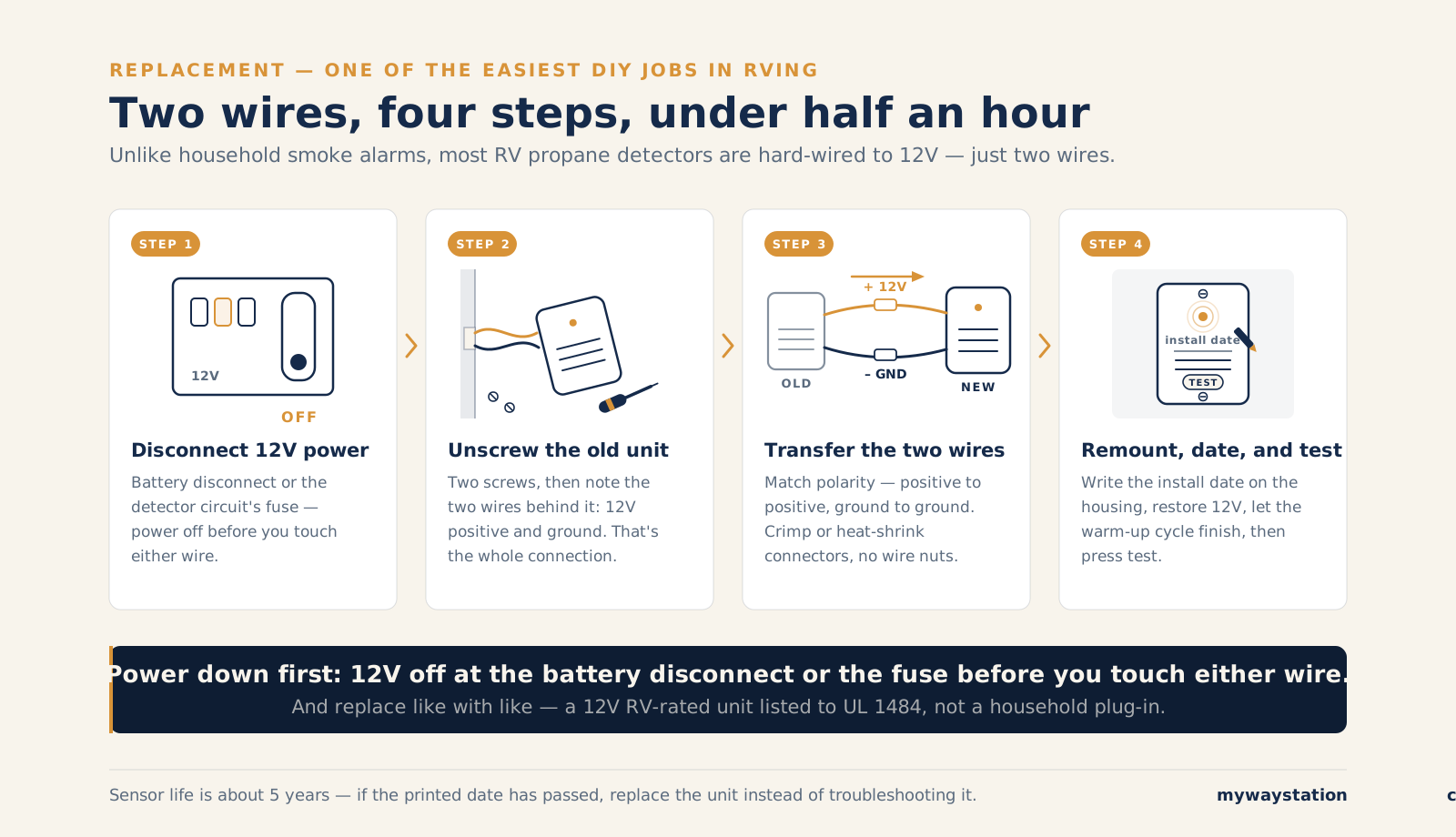
The whole job, diagrammed: 12V off, two screws out, two wires over (polarity matched), and a dated, tested unit back on the wall. Real install photos will replace this diagram once we have replacement hardware on the bench.
- Buy a 12V RV-rated replacement listed to UL 1484 — not a household plug-in unit, which isn't built for RV vibration, temperature swings, or 12V power. The Safe-T-Alert 30/35 series and RV Safe units are the common choices, and many drop into the existing mounting hole. Expect roughly $50–$85 street price for a propane-only or dual LP/CO unit — two campground nights, every five years, to be woken up correctly.
- Disconnect 12V power (battery disconnect or the detector circuit's fuse).
- Unscrew the old unit and note the two wires: 12V positive and ground.
- Connect the new unit — match polarity, use crimp or heat-shrink connectors, no wire nuts (vibration).
- Restore power and test. The unit runs a warm-up cycle before it's actually monitoring — a couple of minutes of blinking for the gas sensor, and up to ten minutes for the CO side of a combo unit. Press the test button; write the install date somewhere you'll see it.
If a rig you bought used has no detector at all — it happens; frustrated previous owners have been known to "solve" false alarms with wire cutters — installing one is this weekend's project. And never answer a false-alarming detector by unplugging it and going back to sleep.
The uncomfortable part: an alarm is only as good as someone hearing it
Here's the limitation nobody prints on the box. A propane detector is a local alarm — an 85-decibel siren aimed at whoever is standing in the RV. If the rig is parked in storage, or you're at dinner while the dog holds down the fort, a propane alarm blasting in an empty RV is a tree falling in an empty forest. It will dutifully scream until the leak disperses or the battery dies, and you will learn about it never.
That's not a knock on the detector — a local alarm is its whole designed job. It's a gap in the system: RV safety devices assume an occupant, and RVs spend most of their lives unoccupied. Closing that gap is what remote monitoring is for — pushing propane, power, and temperature alerts to your phone wherever you are. We've compared the options in our guide to the best RV monitoring systems, and if your rig sits unattended for months, see the storage monitoring guide.
FAQ
Why does my RV propane alarm keep going off in the middle of the night? The usual suspects: low battery voltage (overnight is when your house battery is at its lowest — Safe-T-Alert units operate down to about 8 volts and trip a beeping malfunction alarm below that) and an expired sensor issuing end-of-life warnings. Check the voltage and the detector's printed date — but if you smell rotten eggs, treat it as real and get out first.
Can a dog fart really set off a propane detector? Yes, and it's well documented in owner forums. Flatulence contains methane and hydrogen — combustible gases the sensor legitimately detects — delivered at floor level where the detector is mounted. Move the dog bed, not the detector.
How long do RV propane detectors last? About 5 years of sensor life on the common Safe-T-Alert and RVSafe units; the unit signals end-of-life with chirps or error codes and can't be recalibrated — only snoozed briefly before it demands replacement. Check the printed date and replace when due, even if it seems fine.
Why is the propane detector on the floor of my RV? Propane is about 1.5x heavier than air, so a leak pools at the floor and rises from the bottom up. Detectors are mounted low so they meet the gas first. Don't relocate one higher to dodge false alarms.
How much does it cost to replace an RV propane detector? Roughly $50–$85 street price for a 12V RV-rated (UL 1484) unit, propane-only or dual LP/CO. It's a two-wire DIY job, usually under half an hour.
Can I just disconnect my RV propane detector if it keeps false alarming? No. A chronic false alarmer is telling you something — usually that it's expired, your voltage is sagging, or your batteries are gassing — and every one of those has a real fix. An RV with propane plumbing and no working detector is a bet you don't want on the table while you sleep.
How do I know if my propane alarm is a real leak? Smell low along the floor for rotten eggs, check whether any propane appliance was running, and soap-bubble-test the fittings. Any gas smell, or any doubt: everyone out, gas off at the tank (unless the leak is at the tank), call 911 or your propane supplier from a safe distance, and pressure-test before using propane again.
Bottom line
An RV propane detector that keeps going off is annoying by design — a deliberately paranoid sensor watching a genuinely dangerous gas from the worst seat in the house: ankle height, where the dust, the dog, and the battery fumes live. Rule out a real leak first, every time. Then check the two things that explain most false alarms — the detector's age and your 12V voltage — before working down the list. Replace the unit on schedule (it's cheap, it's two wires), leave it mounted low where it belongs, and if your rig spends serious time empty, remember that the loudest alarm in the world only works if someone's there to hear it.
[Disclosure placeholder: once Waystation launches, add standard disclosure — we're building an RV monitoring product; this guide reflects published standards, manufacturer documentation, and owner reports.]
Stay in the loop
Occasional updates from the road and the workbench — what we're learning, what we're building. No spam, easy out.
Draft preview — this form connects to the email service at launch.