
Seasonal & storage
RV Humidity, Dehumidifiers, and Mold: Why Your Rig Is a Moisture Machine (and How to Dry It Out)

Here's a fun experiment nobody wants to run: seal four people inside 250 square feet overnight, run the stove for breakfast, take two showers, and then check the windows. In a house, that moisture disappears into 2,000 square feet of air volume and a ventilation system designed by someone who thought about it. In an RV, it condenses on the nearest cold surface and starts planning a mold colony.
RVs don't have a humidity problem the way houses do. They have a humidity problem the way submarines do: a lot of biology in a very small box with very thin walls. The difference is that submarines have dehumidification engineered in, and your RV has a roof vent and your good intentions.
This guide covers the whole moisture picture — why rigs get wet from the inside, what the numbers should be, where mold actually starts (it's not where you're looking), which dehumidifier type fits which situation, and why winter storage is where most mold stories begin.
Why RVs are moisture machines
Every moisture problem in an RV comes down to a simple equation: water produced inside minus water removed, condensing on the coldest surface available. RVs lose on all three terms.
You are the biggest moisture source. A single person exhales roughly 400 grams — a bit under half a liter — of water vapor per day just breathing, before perspiration. Add cooking, dishes, and showers and the household total climbs fast: building-science estimates put a family of four at converting roughly 2 to 3 gallons of water a day into vapor (about 8–12 liters), with a single shower adding a pint or two and cooking a meal one to three pints. In a house, that's a rounding error. In an RV, it's a fire hose: it takes only about four to six pints of water vapor to push a 1,000-square-foot house from 15% to 60% relative humidity, and your rig is a quarter of that volume.
Propane adds water — but only from the unvented flames. Burning propane produces water vapor as a primary combustion product, and the chemistry is fixed: about 1.6 pounds of water for every pound of propane burned — roughly 0.8 gallon of water per gallon of propane. Here's the distinction that owner forums get wrong constantly: your RV's furnace has a sealed combustion chamber vented outside, so its moisture leaves the rig. Your stovetop, oven, and any portable catalytic or "Buddy"-style heater exhaust directly into your living space. Every hour a portable propane heater runs, it's quietly humidifying your RV. If you heat with one and wonder why the windows weep, that's why.
And then it all finds a cold surface. RV walls are an inch or two thick, framed with aluminum that conducts heat beautifully (thermal bridging), with single-pane windows in most rigs. On a cold night, every window frame, wall stud line, and uninsulated corner drops below the dew point of your indoor air. Warm damp air touches cold surface, water appears. That's condensation — not a leak, though it's flooded plenty of forum threads with leak panic.
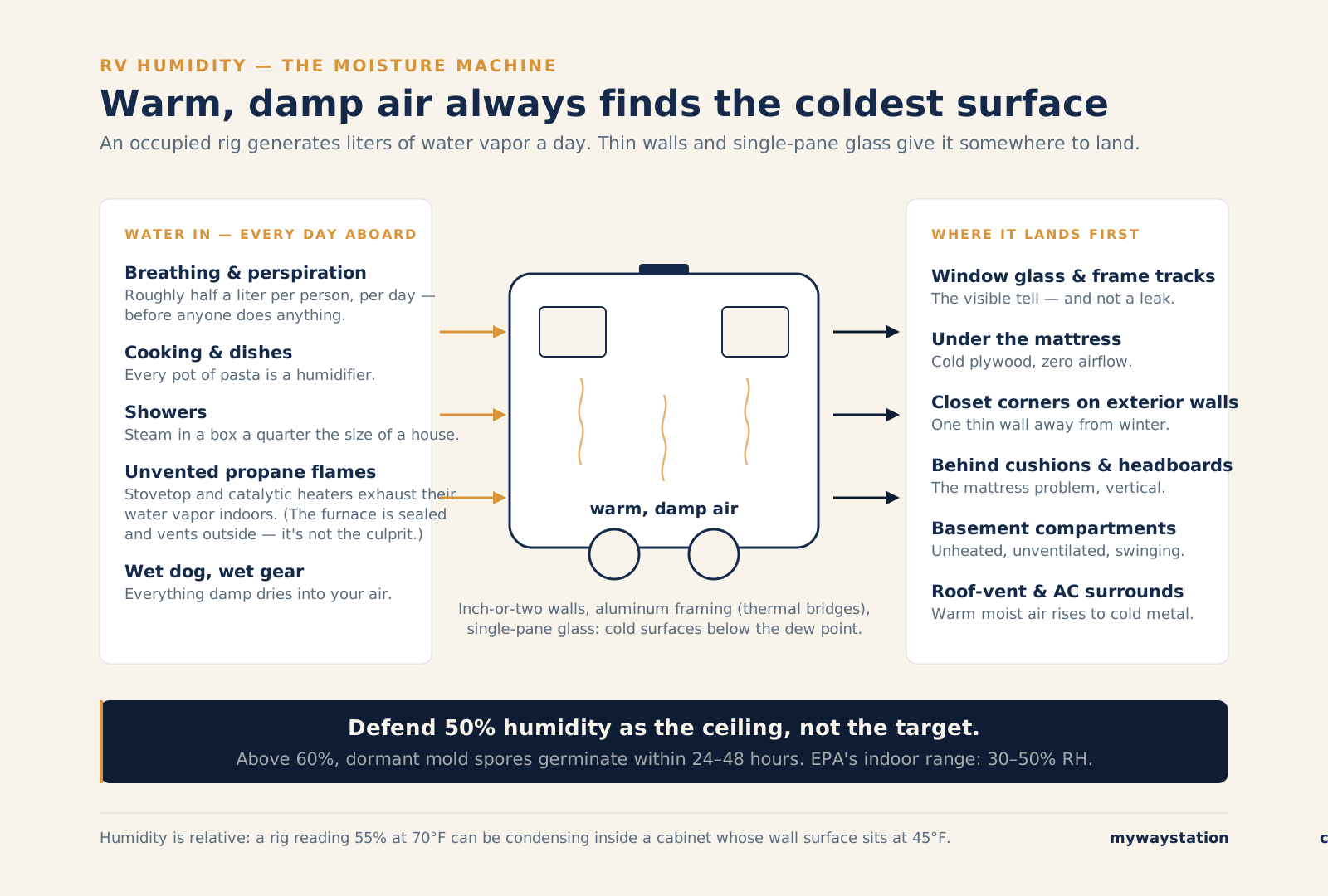
Everything you do inside makes water, and thin walls with single-pane glass give it somewhere cold to land.
The target: 30–50% relative humidity
The EPA's guidance for indoor spaces is to keep relative humidity below 60%, ideally between 30% and 50%. That range isn't arbitrary — it's a valley between two different ways to damage your rig:
- Above ~60%: dormant mold spores on surfaces can germinate within 24–48 hours of sustained high humidity. Dust mites thrive. Wood swells. That musty smell moves in and starts paying rent.
- Below ~30%: sustained very dry air shrinks and cracks wood cabinetry and trim, dries out rubber seals and gaskets, and makes winter static electricity a contact sport. If you winter in Arizona, this end of the scale is your problem, not mold.
The practical takeaway: 50% is the ceiling to defend, not the target to hover near. Between 40% and 50% is comfortable and safe; if your rig sits at 65% every evening, you don't have a comfort issue, you have a countdown.
One measurement note: humidity is relative — the same air holds less water when it's cold, so RH climbs as temperature drops. A rig at 55% RH at 70°F can hit condensing conditions inside a cabinet whose wall surface is 45°F. That's why mold shows up in cold corners even when the hygrometer on the counter reads "fine."
Where mold actually grows first in an RV
Mold doesn't start in the middle of the room where you'd see it. It starts where humid air meets cold surfaces in still, dark air. Check these spots — in roughly this order:
- Under the mattress. The number-one owner-reported location, especially in beds on solid platforms. You sweat all night, vapor migrates down through the mattress, hits the cold plywood deck, and condenses where air never moves. Owners routinely report flipping a mattress in spring to find the underside speckled black — it's common enough that r/RVLiving has a whole thread on mold under the mattress where the OP's proposed fix was cutting up pool noodles as DIY airflow spacers. The instinct is exactly right (air under the mattress), even if purpose-made spacer matting does it better.
- Closet corners and cabinet interiors on exterior walls. Closed doors, no airflow, one thin wall away from winter.
- Window frames and the wall below them. Condensation runs off the glass, pools in the frame track, and wicks into the wallboard below. The black gunk in the rubber gasket is the visible tell.
- Behind cushions and headboards against exterior walls. Same physics as the mattress, vertical edition.
- Basement and pass-through compartments. Unheated, unventilated, and full of temperature swings — plus whatever damp hose or camp chair you tossed in last fall.
- Around roof vents and AC gaskets. Warm moist air rises; the vent surround is often the coldest interior surface overhead.
The pattern: airflow is mold's enemy as much as dryness is. A rig at 55% RH with air moving beats a rig at 50% with a mattress flat on cold plywood.
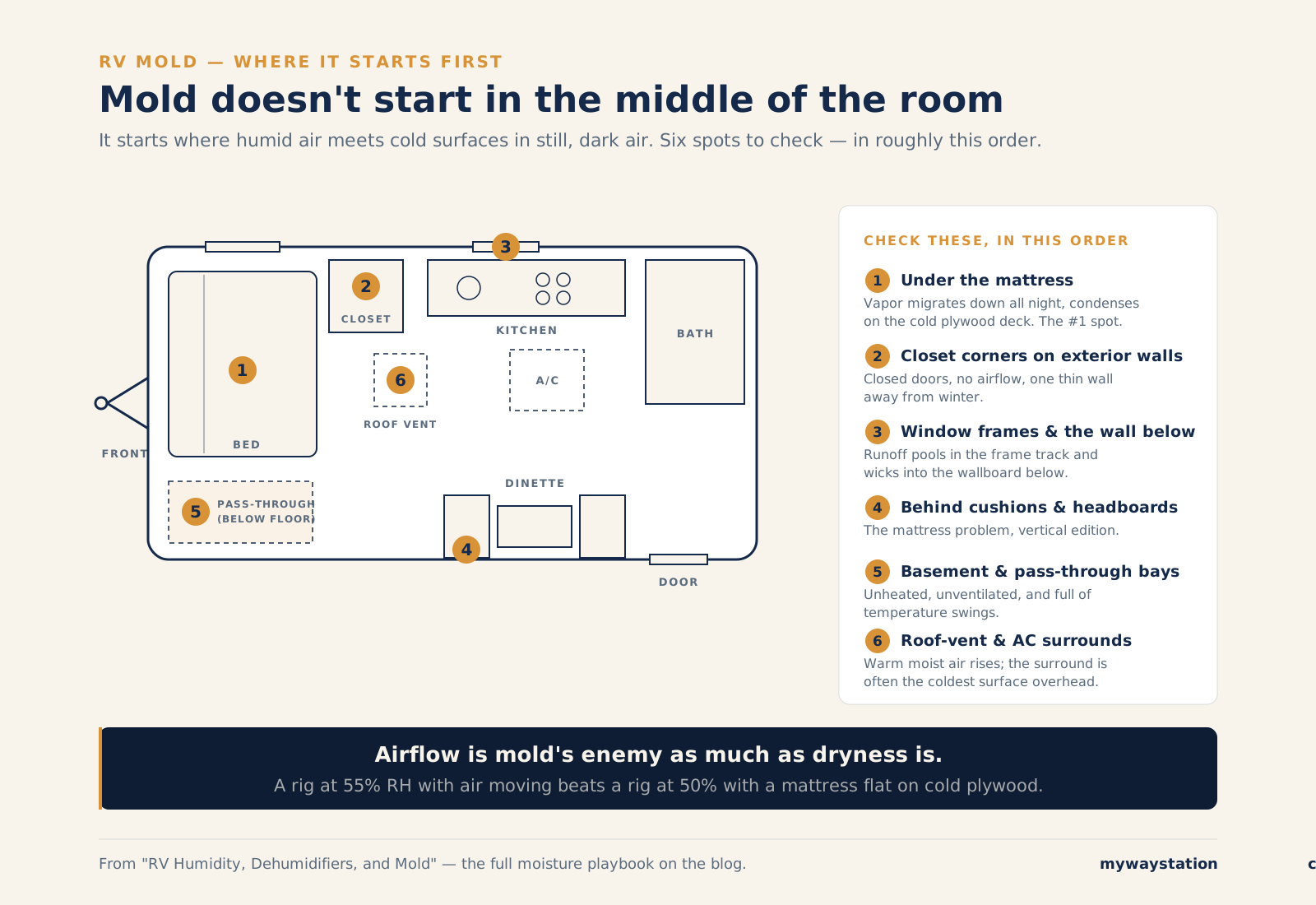
Six spots, one pattern: humid air meeting a cold surface where nothing moves. Check them in this order.
RV dehumidifier types: which one fits your situation
"RV dehumidifier" covers four very different machines. One framing note before the comparison: this is not just cold-season gear. When someone asked r/RVLiving what dehumidifier people run in the winter, u/OldDiehl's reply was "Winter? What? We use a dehumidifier year round" (thread) — and the physics in the first section explains why full-timers land there. Here's the honest comparison — including the part most listicles skip, which is that the cheap ones mostly don't work and the effective ones have a temperature catch.
| Type | Removes per day | Works below ~60°F? | Power | Best for |
|---|---|---|---|---|
| Compressor | 20–50 pints | Poorly — capacity collapses, coils ice | ~300–700W | Occupied rigs in warm/mild weather |
| Desiccant | 10–20 pints | Yes — its whole advantage | ~300–600W | Cold-weather camping, heated winter use |
| Thermoelectric (Peltier) mini | ~0.5–1.5 pints | Barely works anywhere | ~25–75W | A single closet, at best |
| Moisture absorbers (DampRid etc.) | Ounces per day | Yes, slowly | None | Unpowered storage — damage limitation |

The shareable version: match the machine to the temperature — compressor above ~60°F, desiccant below it, absorbers only when there's no power at all.
Compressor dehumidifiers — best for occupied rigs in warm weather
The standard machine: refrigerated coils condense water out of the air, exactly like your AC does. In a lived-in rig during a humid summer, a small 20–30 pint unit is the most water removed per watt you can buy, and it doubles as the fix for the "everything feels damp in the Pacific Northwest" problem.
The catch is temperature. Compressor efficiency drops hard below roughly 65°F, and below ~50°F the coils start icing over, forcing defrost cycles — in cold air a unit can spend a large chunk of every hour defrosting instead of collecting water, cutting real-world capacity to a fraction of the spec-sheet number. A compressor unit in a 45°F stored rig spends most of its energy defrosting itself. It's the right machine in July and nearly the wrong machine in January.
Desiccant dehumidifiers — best for cold weather, full stop
Desiccant units skip refrigeration entirely: a rotating wheel of silica-type material adsorbs water vapor directly, then a heater regenerates the wheel. Because there's no coil to chill, temperature barely matters — an RV-suited desiccant unit like the EcoSeb DD122 holds its full rated extraction across an operating range of roughly 34°F to 104°F, the very cold end where a compressor unit would be iced solid. They're also quieter and lighter, and their exhaust runs a few degrees warm, which is a feature in a winter rig.
The tradeoffs: they typically use about twice the electricity of a compressor unit for the same water in a warm room, and per-pint capacity is lower. The rule of thumb from the building-dryness world holds for RVs: above ~60°F, buy compressor; below it, buy desiccant. If you camp shoulder seasons or keep a stored rig lightly heated, desiccant is the honest answer even though the compressor unit's box quotes bigger numbers.
Thermoelectric minis — the ones sold as "RV dehumidifiers"
Search "RV dehumidifier" on Amazon and the top results are $40–60 Peltier-effect units pulling a few hundred milliliters a day under ideal conditions. Physics is not on their side: they're a fraction of a compressor unit's capacity at a similar wattage-per-pint or worse, and they too fade in cold air. Owner reports are consistent — fine for keeping one hanging closet fresher, hopeless against four humans and a wet dog. If your moisture problem is big enough to notice, it's big enough to outrun a Peltier unit.
Moisture absorbers — for when there's no power at all
Covered next, because they're really a storage strategy, not a dehumidifier.
DampRid and friends: what moisture absorbers can and can't do
Calcium chloride absorbers (DampRid is the brand everyone knows) pull water vapor into a bucket of brine, no electricity required. In a 90-day independent test by Practical Sailor, a hi-capacity tub absorbed about 4 pounds of water — roughly half a gallon. Over three months. Recall from up top that an occupied rig can generate multiple liters per day.
That's the whole story in two numbers. Moisture absorbers cannot keep up with an occupied RV, and anyone using them as the primary defense while living aboard is bailing the ocean with a teaspoon. Where they earn their keep is unpowered storage: nobody's inside making moisture, the doors stay shut, and the only water to fight is what leaks in with air exchange and temperature swings. In that scenario, two or three hi-capacity tubs (DampRid rates its 4 lb tub for up to six months in a 250 sq ft space) are cheap, silent insurance. Place them low — the brine bucket spills if it tips, and calcium chloride solution is unkind to carpet and metal.
Rechargeable silica canisters (Eva-Dry style) play the same role for closets and drawers, with less capacity but no spill risk.
Winter storage: where most RV mold stories begin
Ask around any spring forum thread about mold and the plot is identical: rig sealed in October, opened in April, smells like a gym bag. Winter storage is the highest-risk season for three compounding reasons:
- The rig is sealed. No roof vents cracked, no door traffic, no air exchange. Whatever moisture is inside on closing day — in cushions, in the mattress, in that "basically dry" tank — stays.
- Temperature swings wring water out of the air. A stored RV cycles from freezing nights to sun-warmed afternoons. Each swing pushes interior surfaces through the dew point, condensing and re-evaporating the same trapped water all over your interior, week after week.
- Nobody is looking. A moisture problem in an occupied rig gets noticed in days. In storage it gets five uninterrupted months. Mold needs 24–48 hours above 60% RH to germinate; you're giving it 150 days.
The winter storage mold-prevention checklist
- [ ] Dry the rig out before you close it up. Run the dehumidifier or heat with windows cracked for a day. Closing the door on damp air is prepaying for mold.
- [ ] Empty and dry the fridge — doors propped open. The classic spring horror show, and the easiest to prevent.
- [ ] Pull cushions and mattress up on their edges so air reaches the undersides, or better, take bedding and soft goods home.
- [ ] Open every cabinet, closet, and interior door, including the shower door. Dead air is mold's favorite room.
- [ ] Remove anything damp or organic — towels, firewood, paper goods, the dog's blanket, that half-open bag of flour.
- [ ] Deploy moisture absorbers (unpowered storage) or a desiccant dehumidifier draining to the shower pan (powered storage). Not a compressor unit — see above; it'll ice and idle all winter.
- [ ] Check roof and window seals before storing. Interior humidity control is pointless if rain has a way in.
- [ ] Crack a roof vent with a vent cover if your climate allows — a little air exchange beats a hermetic seal in most climates (regional debate; humid coastal areas may differ).
- [ ] Put a remote humidity monitor inside. The one item on this list that tells you whether the rest of it worked.
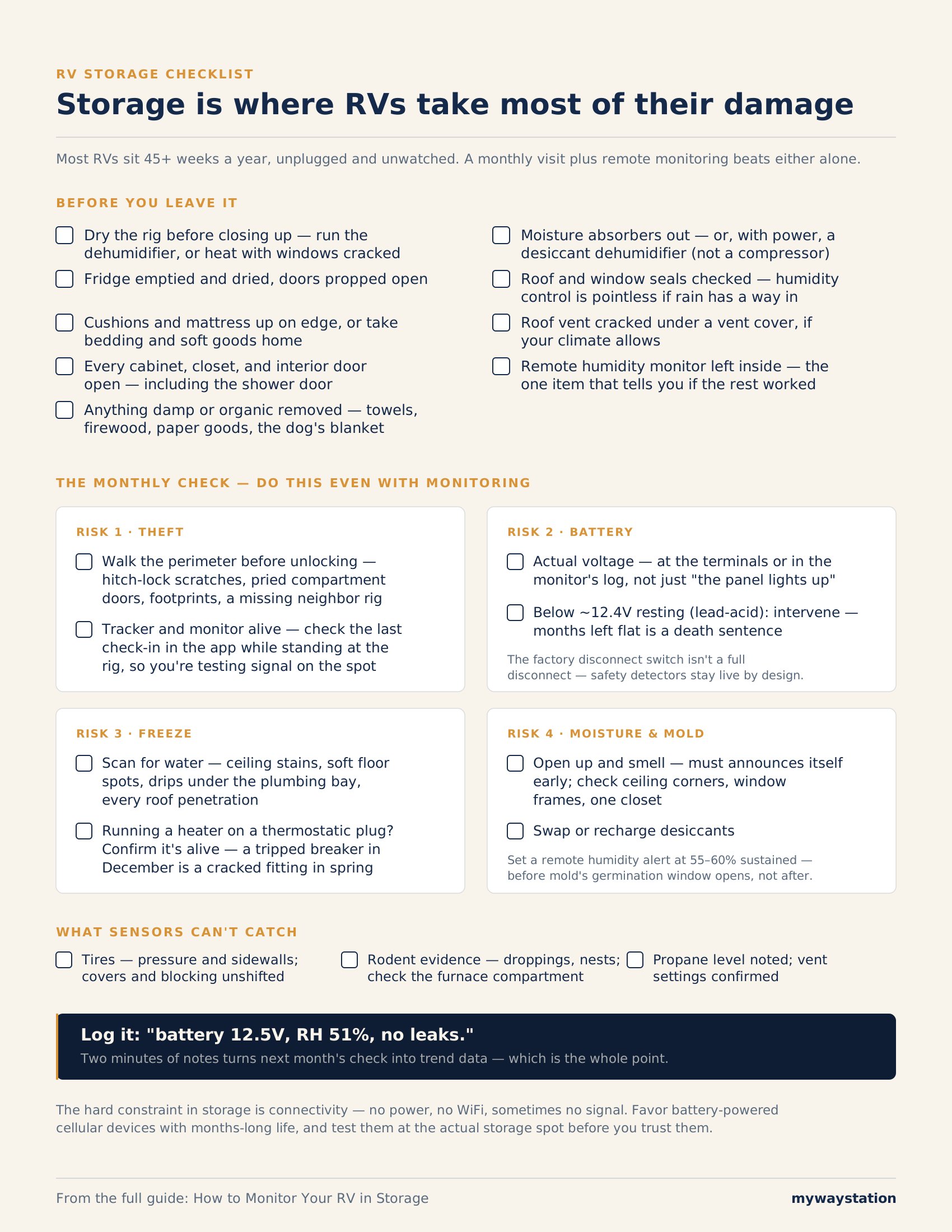
Printable one-pager — the full PDF comes free with the email signup in our storage guide.
Monitoring: a number you never see is still an unseen problem
Everything above is prevention. Monitoring is how you find out prevention failed in November instead of April — when the fix is running a dehumidifier for a weekend instead of replacing a mattress and remediating a closet.
Two honest notes about the measuring itself:
Cheap hygrometers drift. The $10 dial and mini-LCD units commonly Velcroed to RV walls typically start at around ±5% RH when new and drift further with age and temperature swings — comparison testing of sub-$15 units routinely finds errors above 10%, versus roughly ±2–3% for a decent AcuRite or ThermoPro. That's the difference between reading 55% and being at 62% — i.e., the difference between "fine" and "germinating." If a decision rides on the number, buy a sensor with a published accuracy spec, or sanity-check your cheap one with a salt test.
A local reading in a stored rig is a diary, not an alarm. The hygrometer on the counter of a rig you visit in April faithfully recorded the whole disaster and told no one. For a stored rig, you want the number sent to you — a cellular or connected sensor that alerts when humidity crosses your threshold, so a failed absorber or a new roof leak becomes a Tuesday errand instead of a spring discovery. We've compared the hardware options in our RV monitoring systems roundup, and our guide to monitoring an RV in storage covers the storage-specific connectivity problem — most storage lots have neither power nor WiFi, which narrows the field fast. Tinkerers can roll their own alerts with a Home Assistant build and a $15 humidity sensor.
Set the alert at 55–60% sustained, not the panic threshold. You want the warning before the germination window opens, not after.
FAQ
What humidity level should an RV be kept at? Between 30% and 50% relative humidity, per EPA indoor guidance, and below 60% at all costs — sustained humidity above 60% lets mold spores germinate within a day or two. Below 30% for long stretches causes its own damage: cracked wood trim and dried-out seals.
Will a dehumidifier work in a cold stored RV? A compressor dehumidifier, barely — capacity collapses below about 50–60°F and the coils ice over. A desiccant dehumidifier, yes: it keeps its rated capacity down to around freezing (the EcoSeb DD122, for instance, is rated to about 34°F), which is exactly why it's the right type for winter storage with power. No powered dehumidifier helps a rig without electricity — that's moisture-absorber territory.
Is DampRid enough to keep an RV mold-free? In unpowered storage, usually — a hi-capacity tub absorbs a few pounds of water over several months, which matches the modest moisture load of a sealed, unoccupied rig. While you're living in the RV, no — occupants generate liters of moisture per day, orders of magnitude beyond what calcium chloride can absorb.
Does a propane furnace cause condensation in an RV? Not the built-in furnace — its combustion chamber is sealed and vented outside, so the water vapor leaves the rig. Portable catalytic and "Buddy"-style heaters and your stovetop are a different story: they exhaust all their combustion moisture (about 1.6 pounds of water per pound of propane burned — roughly 0.8 gallon per gallon) directly into your living space.
Why is there moisture under my RV mattress? Your body releases water vapor all night; it migrates down through the mattress and condenses against the cold plywood platform, where no air moves. It's the most common first site of RV mold. Fixes: airflow spacers under the mattress (Hypervent-style matting or slats), lifting the mattress when stored, and keeping ambient humidity in range.
How do I get rid of mold smell in an RV? The smell means active or recent growth — find it before you freshen anything. Check the mattress underside, closet corners on exterior walls, window tracks, behind cushions, and the basement. Clean small patches on hard surfaces; porous materials (mattresses, cushions, carpet) with established growth generally need replacement. Then fix the humidity, or you'll be back.
Bottom line
An RV makes moisture faster than any house and forgives it more slowly. The playbook is short: know your number (30–50%), match the dehumidifier to the temperature — compressor for warm occupied rigs, desiccant for cold ones, absorbers only for unpowered storage — ventilate when you make steam, and never seal a rig for winter without drying it first and leaving a sensor inside that can tattle. Mold needs about 48 damp hours to start and gets five silent months in storage. The whole game is making sure somebody's watching during them.
[Disclosure placeholder: once Waystation launches, add standard line — we build RV monitoring hardware; this guide reflects published specs, building-science sources, and owner reports.]
Stay in the loop
Occasional updates from the road and the workbench — what we're learning, what we're building. No spam, easy out.
Draft preview — this form connects to the email service at launch.