
Power & electrical
RV Surge Protectors & EMS Units: The Complete Guide (30 Amp, 50 Amp, and What Actually Kills Your Electronics)

Here's the thing nobody tells you when you buy an RV: the power pedestal at the campground is the least trustworthy outlet you will ever plug anything into. It's been wired by the lowest bidder, baked in the sun for fifteen years, chewed by every 50-amp plug that's ever been yanked out sideways, and it's sharing a transformer with forty other rigs all running air conditioning at 4 p.m. in July.
Your RV, meanwhile, is a rolling collection of the most voltage-sensitive stuff you own — residential refrigerator, air conditioner compressors, inverter/charger, TVs, and a control board in basically every appliance.
A surge protector or EMS is the thing that stands between those two facts. This guide explains what the different devices actually do (the marketing is genuinely confusing), what bad pedestal power does to your rig, and how the three major brands compare on published specs. No hands-on lab here — this is specs plus several hundred owner reports from iRV2, Forest River Forums, and RV Facebook groups. We'll tell you when the two disagree.
The short version, if you're in a hurry:
- A basic "surge protector" only handles voltage spikes. That's the rarest problem at a campground.
- An EMS (Electrical Management System) also protects against low voltage, open ground, open neutral, and reverse polarity — the pedestal problems that actually happen. Buy an EMS. The price difference is one repair bill's rounding error.
- 30-amp and 50-amp are different services, not just different sizes — a 50-amp RV gets 3.3x the power. Buy the protection that matches your RV's plug, and use dogbone adapters for everything else.
30 amp vs 50 amp: it's not just "more power"
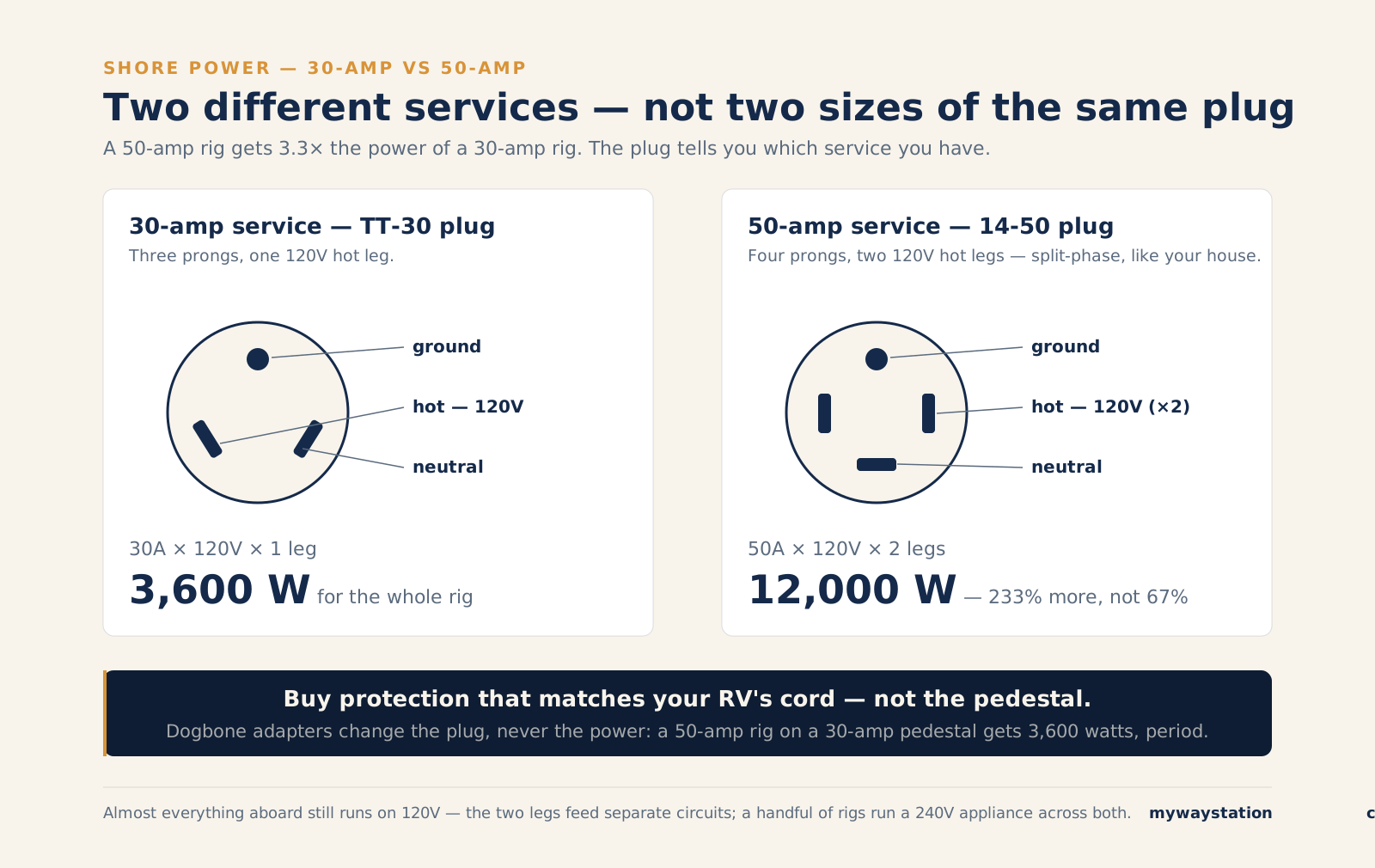
Two different services, not two sizes of the same plug — and why your protection should match the RV's cord, not the pedestal.
This trips up almost everyone, so let's get it right in two paragraphs.
A 30-amp RV uses the three-prong TT-30 plug: one 120-volt hot leg, one neutral, one ground. Do the math and that's 30 amps × 120 volts = 3,600 watts for the whole rig. That's why a 30-amp trailer can't run two air conditioners and a microwave at once.
A 50-amp RV uses the four-prong 14-50 plug: two 120-volt hot legs, a neutral, and a ground — the same 120/240-volt split-phase service your house has. Each leg carries 50 amps, so you get 50 × 120 × 2 = 12,000 watts. That's not 67% more than 30-amp service; it's 233% more. (Almost everything in the RV still runs on 120V — the two legs power separate circuits — though a handful of rigs run a 240V appliance across both legs.)
Two consequences for this article:
- Buy protection that matches your RV's cord, not the pedestal. A 50-amp RV needs a 50-amp EMS even when it's plugged into a 30-amp pedestal through an adapter.
- 50-amp rigs have an extra failure mode — the neutral is doing load-balancing work between two hot legs, and if it fails, things get expensive fast. More on that horror show below.
What a basic surge protector actually protects against (spoiler: one thing)
A basic surge protector — the $60–100 kind — is a box of MOVs (metal oxide varistors) that sacrifice themselves to absorb brief voltage spikes: nearby lightning strikes, grid switching transients, that kind of thing. The "joules" rating is the total spike energy the MOVs can eat before they're used up. Bigger is better; think of it as the fuel tank.
Here's what a basic surge protector does not protect against:
- Low voltage (a brownout)
- High voltage that's sustained rather than a spike
- Open ground
- Open neutral
- Reverse polarity (hot and neutral swapped)
- Frequency faults from a badly governed generator
Look at that list again. Those are the things that actually go wrong at campground pedestals. Genuine damaging surges are rare; a campground running at 104 volts on a hot afternoon is a Tuesday. A basic surge protector will happily pass 104 sagging volts straight through to your air conditioner all day while it slowly cooks. Some of the better basic units at least have indicator lights that tell you the pedestal is miswired — useful, but only if you look, and they still won't disconnect anything.
A basic surge protector is better than nothing. It is not close to enough.
What an EMS adds — and why it's the one to buy
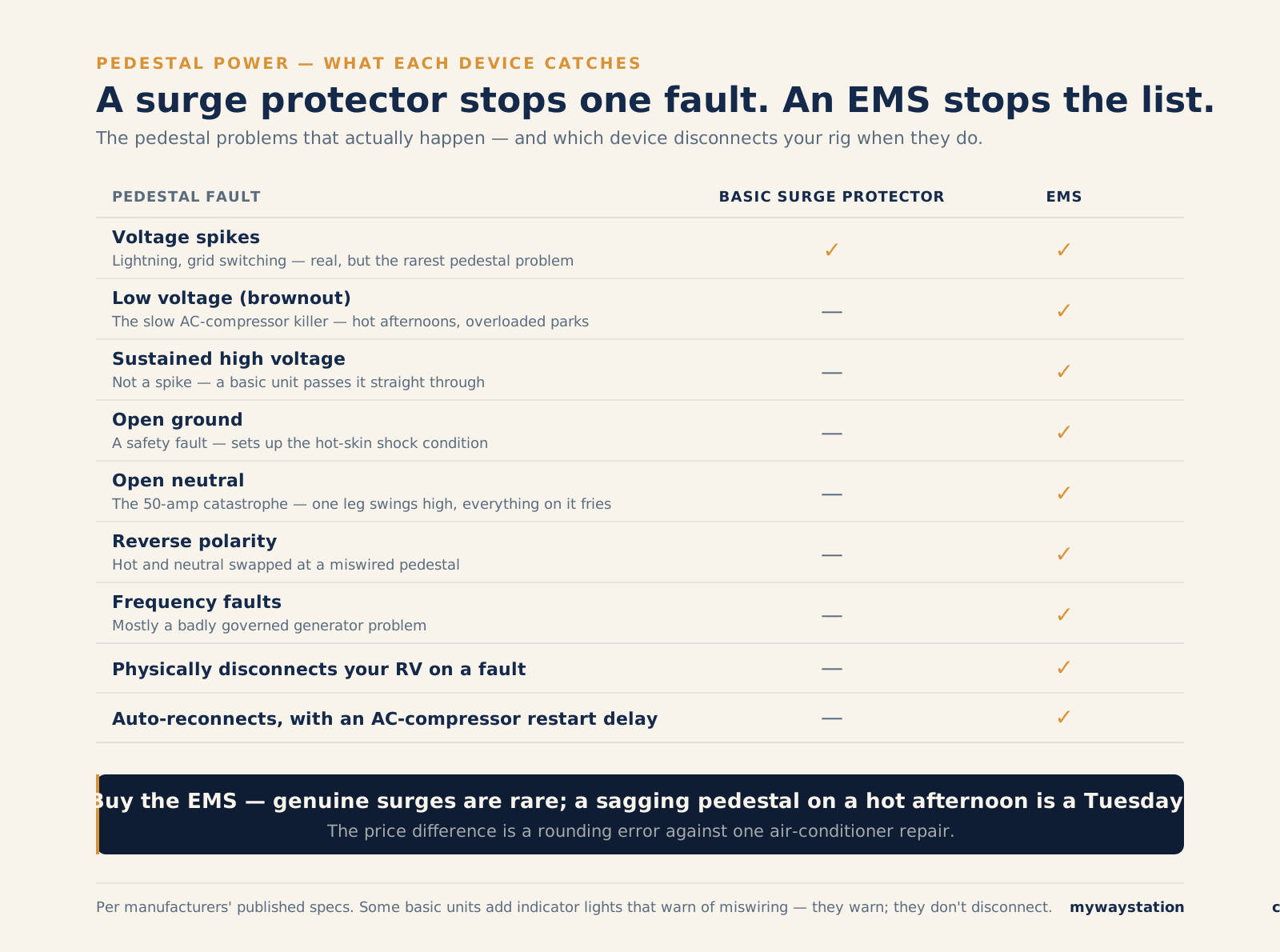
The faults that actually happen at campground pedestals — and which device disconnects your rig when they do.
An EMS — Electrical Management System, a term Progressive Industries popularized; Southwire calls the same idea "Total Electrical Protection" — contains the same surge-absorbing MOVs plus a microprocessor that continuously watches the power and a contactor (a big relay) that can physically disconnect your RV when something's wrong. Typical protections, per the manufacturers' published specs:
- Low voltage — disconnects below 102V (Southwire) or 104V (Progressive, Hughes), reconnects when it recovers
- High voltage — disconnects above 132V on all three major brands (Progressive's response gets faster as voltage climbs — within 60 milliseconds above 156V)
- Open ground — refuses to pass power with no ground path (this one's a safety issue, not just an equipment issue — see hot-skin, below)
- Open neutral — the 50-amp catastrophe scenario
- Reverse polarity — hot and neutral swapped at a miswired pedestal
- Frequency deviation — mostly a generator problem
- AC compressor delay — after any disconnect, the EMS waits before restoring power (90 seconds on Hughes, 128 on Southwire, 136 on Progressive) so your air conditioner's head pressure can bleed off instead of hard-starting against it
That disconnect-and-wait behavior is the whole value. The EMS doesn't just warn you about bad power; it refuses to feed it to your rig, then automatically reconnects when the pedestal behaves again.
If the budget only covers one device, this is it. The delta between a basic surge protector and a true EMS is roughly $150–250, which is less than the parts bill on a single rooftop air conditioner — never mind a residential fridge control board.
What bad pedestal power actually does to your RV
Low voltage kills air conditioners. This is the big one, and it's counterintuitive — low sounds harmless. But an AC compressor is an induction motor, and a motor asked to do the same work at lower voltage draws more current. More current means more heat in the windings. Owners' forums are full of compressors that died at the end of a long, hot, brown-out summer, and low voltage is the usual suspect. It's slow damage, too — nothing dramatic happens at 105V, which is exactly why it's insidious. Sustained low voltage also makes converters and inverter/chargers work harder and hotter.
Open neutral destroys everything at once. On 50-amp service, the neutral is what keeps each 120V leg at 120V. If the neutral connection fails — corroded pedestal lug, broken wire — the two legs become a voltage divider across 240V, split according to the load on each side. The lightly loaded leg can swing way above 120V, and every electronic device on it sees the overvoltage simultaneously. This is the single most destructive common fault in RV electrical, and it's precisely the fault a $99 surge protector shrugs at, because it's not a spike. An EMS catches it and opens the contactor.
Reverse polarity and open ground don't necessarily damage equipment immediately — which makes them more dangerous, not less, because everything keeps working while your rig's chassis is set up to hurt somebody.
Which brings us to the scary one.
Hot-skin: the fault that shocks you, not your electronics
If you read one outside source on RV electrical safety, make it Mike Sokol — the RVelectricity guy, and the closest thing this niche has to a recognized national authority. His explanation of hot-skin voltage is the canonical one, and the summary goes like this:
A hot-skin condition is when your RV's metal skin and chassis sit at a significant AC voltage above the earth around it — so touching the RV while standing on the ground puts you in the circuit. It takes two ingredients: some fault current leaking into the chassis (a chafed wire, a failing water heater element, even normal filter-capacitor leakage), plus a missing or bad ground connection that gives that current nowhere safe to go. With a good ground, the leakage drains harmlessly or trips a breaker. Without one, the whole rig floats hot.
Per Sokol's numbers: a few volts of difference is normal; above ~5 volts suggests a grounding problem; and by 30–40 volts it can be lethal with wet hands and damp ground. He's also documented "reflected" hot-skin — where a badly grounded campground feeder lets one RV's fault energize every RV on the circuit. You did nothing wrong; your neighbor's rig and the campground's wiring did.
Two takeaways. First, this is why the "open ground" light on even a cheap surge protector matters, and why an EMS that refuses to pass power without a ground is a safety device, not a convenience. Second, Sokol's cheap-insurance tip: a ~$30 non-contact voltage tester (Fluke VoltAlert style) waved at the rig before you touch it, every time you plug in somewhere new.
Portable vs. hardwired
Portable units plug in between the pedestal and your cord. Cheaper, no installation, movable between rigs — and stealable, which is why every forum has a thread about locking cables (most units have a lock loop; use it). They also live outdoors in the weather, so look for rain-resistant designs, and their display is at the pedestal, a point we'll return to.
Hardwired units install inside the RV, in the cord path ahead of the panel. Theft-proof, weatherproof, always working even when you're exhausted and it's raining, and usually offered with a remote display you can mount inside. Cost is similar to portable; the real price is an afternoon of installation or a shop bill. All three major brands sell both formats.
Our honest take: hardwired for full-timers and anyone who camps a lot; portable if you're seasonal, switch rigs, or just want to solve this today with zero tools.
Dogbone adapters — where protection meets reality
A dogbone is the curved adapter that mates mismatched plugs — 50-amp RV into a 30-amp pedestal, 30-amp RV into a household 15-amp outlet, and so on. Three rules:
- The adapter changes the plug, not the power. A 50-amp rig on a 30-amp pedestal gets 3,600 watts, period. Manage your loads accordingly.
- Your EMS matches your RV, adapters handle the pedestal. Order at the pedestal: pedestal → dogbone → EMS → shore cord. The EMS still sees and protects everything.
- Buy decent adapters. Dogbones carry full current through two more sets of contacts; the bargain-bin ones are a known melting point. Owner reports consistently favor heavy, name-brand adapters with molded strain relief.
The big three, compared on published specs
| Progressive Industries | Southwire Surge Guard | Hughes Power Watchdog | |
|---|---|---|---|
| Portable 30A | EMS-PT30X, ~$170 street, 1,790J | 34930/34931, 2,450J | PWD30-EPO, $349.99, 3,000J |
| Portable 50A | EMS-PT50X, ~$200 street, 3,580J | 34950/34951, 4,200J, ~$400 street | PWD50-EPO, $399.99, 6,100J |
| Hardwired versions | EMS-HW30C / EMS-HW50C (remote display included) | Yes (35530/35550) | Yes, 30A & 50A |
| Remote visibility | Scrolling display on the unit; hardwired models ship with a wired remote display | Onboard LCD; Bluetooth app on 34931/34951, plus optional 40301 wireless LCD ($65.99 list, ~$44 street) | Bluetooth app standard; Gen II adds WiFi |
| Warranty | Limited lifetime | Limited lifetime, with connected-equipment coverage on models like the 34951 | Limited lifetime; replaceable surge module (one free within 2 years) |
Hughes prices are manufacturer MSRPs from powerwatchdog.com; "street" prices are what major RV retailers were charging as of July 2026 and move constantly.
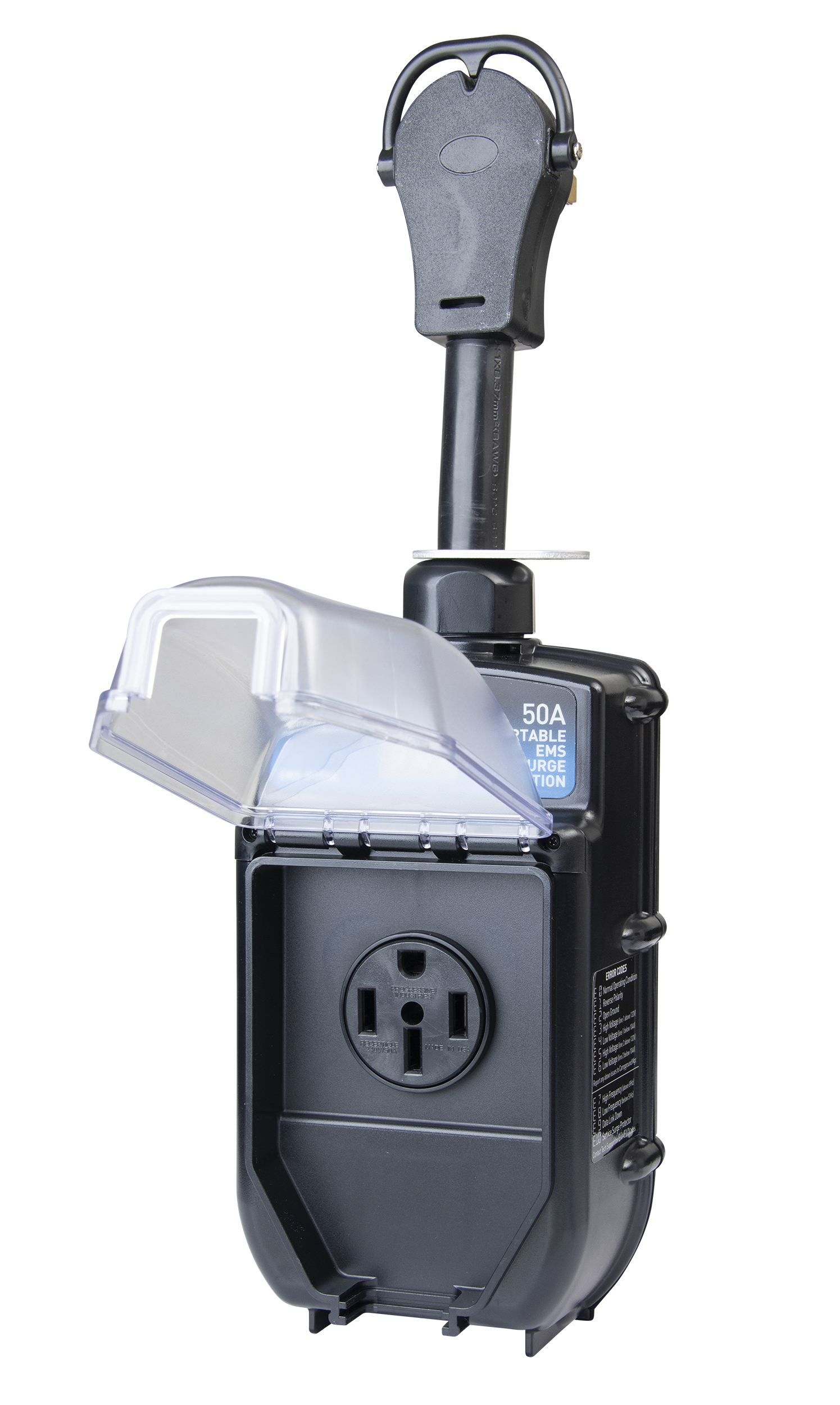
Image: Progressive Industries (Navico Group), https://www.navico.com/progressive-industries
Progressive Industries is the incumbent — "EMS" as a category name is essentially theirs, the units have a decades-long reputation for doing exactly what the manual says, and the limited lifetime warranty is the real thing. The knock: it's the least connected of the three. You get a scrolling numeric display on the unit itself and previous-error codes, which is great engineering circa 2012 and feels like it in 2026.
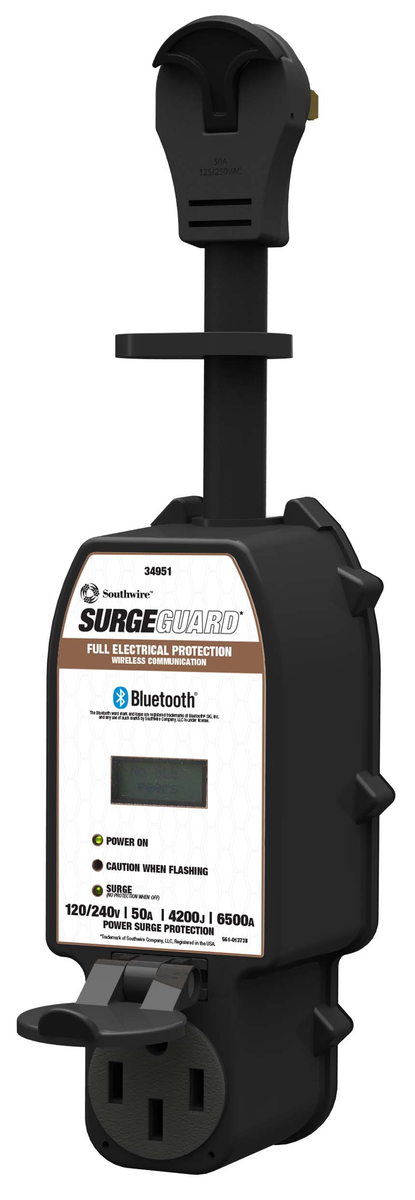
Image: Southwire (Surge Guard), https://www.southwire.com/power-management/recreational-power/50a-portable-surge-guard-wireless/p/34951
Southwire Surge Guard (Southwire bought the TRC Surge Guard line) is the warranty heavyweight: on models like the 34951, a limited lifetime warranty comes with connected-equipment coverage — if the unit fails to protect what's plugged in behind it, Southwire pays for the damage. The spec sheet holds up too: published trip points of 102V/132V, a proper 128-second AC restart delay, and an optional wireless display so you can see pedestal status from inside. One caution for buyers: Southwire's lineup includes both full-protection models (34930/34950 series, which disconnect on low and high voltage) and cheaper partial-protection units like the 44280 that shut off on miswired pedestals and absorb surges but don't watch voltage at all. The model number matters more than the brand name on the box.
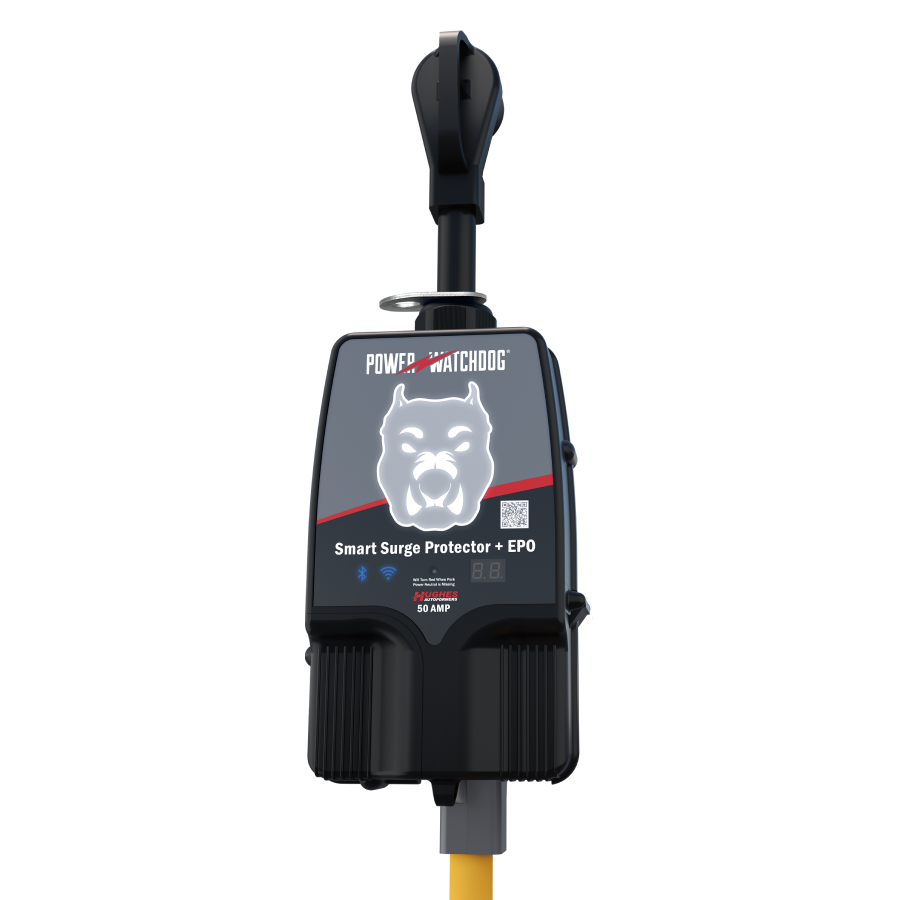
Image: Hughes Autoformers (Power Watchdog), https://www.powerwatchdog.com
Hughes Autoformers Power Watchdog is the modern one, and the one whose design philosophy we find most interesting. Every Watchdog pairs with a Bluetooth app showing live voltage, amperage, and wattage on your phone, and the Gen II units add WiFi so the data can leave the campsite. The EPO ("Emergency Power Off") models are the true EMS units — trip points of 104V/132V, and the highest joule ratings in this comparison — while the base models are surge-only, so again, mind the model number. The surge module is user-replaceable after it sacrifices itself, rather than the whole unit. Hughes also sells the Autoformer, a voltage-boosting transformer for chronically low-voltage parks — a deeper rabbit hole we'll save for another article.
Owner-report texture, briefly: Progressive owners report boring, decade-long reliability and praise the warranty service; Southwire owners like the display and grumble about size and weight; Watchdog owners love the app and occasionally report Bluetooth pairing quirks. Nobody's units are widely reported to miss real faults — this is a mature category where the honest differences are visibility, warranty, and format, not whether the protection works.
The gap nobody's closed: your EMS protects silently
Here's the thing we keep circling back to, because it's the unsolved problem in this whole category.
An EMS is a local device with a local response. When the pedestal browns out at 2 p.m. while you're at the beach, your EMS does its job perfectly: it disconnects, waits, retries. But nothing tells you. The air conditioning is off. The fridge is warming. If you've got a dog in the rig, the clock is running — and you find out about the fault when you're standing at the pedestal reading an error code, hours later. Even the Watchdog's excellent app is Bluetooth-first: brilliant at the picnic table, useless from across town unless you're on a Gen II with WiFi and the campground WiFi is functional, which is a sentence that should make any RVer laugh darkly.
Protection and awareness are different products. The EMS keeps bad power out of your rig; it doesn't tell you your rig currently has no power at all. That's why we tell people an EMS is necessary but not sufficient: pair it with something that watches power and temperature and can reach your phone over cellular. We've written a full guide to shore power loss alerts — why power-loss is the first domino in almost every RV emergency — and our comparison of the best RV monitoring systems covers the devices that fill this gap. Tinkerers can go further and pipe EMS and power data into a Home Assistant smart-RV setup.
FAQ
What's the difference between an RV surge protector and an EMS? A surge protector absorbs brief voltage spikes — that's all. An EMS adds continuous monitoring and physically disconnects your RV from low voltage, high voltage, open ground, open neutral, and reverse polarity, then reconnects when power is safe. The faults an EMS catches are far more common at campgrounds than true surges.
Do I really need a surge protector for my RV? You need an EMS, and yes. One open-neutral event on a 50-amp rig can destroy more electronics in a minute than the device costs by an order of magnitude. Campground pedestals are outdoor electrical equipment maintained on campground budgets — treat them accordingly.
Can I use a 50-amp surge protector on a 30-amp RV? Match the protector to your RV's cord, not the pedestal. A 30-amp RV should use a 30-amp EMS (with a dogbone for 50-amp pedestals); a 50-amp RV should use a 50-amp EMS. A 50-amp EMS on a 30-amp RV mostly means you paid extra for headroom you can't use.
Why does my EMS keep shutting off power at the campground? It's probably not broken — it's reporting. The usual cause is pedestal low voltage on hot afternoons when the park's AC load peaks. Check the error code (or app) before assuming a fault; if it reads low voltage repeatedly, the problem is the park's wiring, and the fix is a different site, a voltage booster like a Hughes Autoformer, or a different park.
Will a surge protector protect against low voltage? A basic one, no — this is the single most important thing to understand in this category. Low-voltage protection is exactly what separates an EMS from a plain surge protector, and low voltage is the fault most likely to slowly kill your air conditioner.
What happens if the campground pedestal is wired wrong? An EMS refuses to pass power and shows you why (reverse polarity, open ground, etc.). A basic protector with indicator lights will tell you if you look. Nothing at all — which is how many rigs are plugged in right now — leaves your RV energized by a miswired pedestal, which is one path to the dangerous hot-skin condition described above. This is also a strong argument for checking your rig with a non-contact voltage tester at every new hookup, per Mike Sokol.
Portable or hardwired — which is better? Hardwired if you camp a lot: theft-proof, weatherproof, always on duty. Portable if you want zero installation or move between rigs. The protection electronics are essentially the same; you're choosing a mounting location.
Bottom line
Skip the basic surge protector and buy a true EMS sized to your RV's cord — roughly $170–380 for 30-amp, $200–450 for 50-amp across the three brands that matter, depending on how street prices are running. Progressive Industries for the warranty and track record, Southwire for the connected-equipment warranty and the wireless display, Hughes Power Watchdog if you want the data on your phone (you do). Add a $30 non-contact tester to the plug-in ritual, courtesy of Mike Sokol.
And then remember what you bought: a bodyguard, not a messenger. Your EMS will stand at that pedestal and take the hit for your rig every single time — silently. Knowing it happened, while you're forty minutes away and the fridge is warming? Different problem. We're working on it.
[Disclosure placeholder: once Waystation launches, add — "We build RV monitoring, which is why the 'silent protection' gap is our favorite axe to grind. The device recommendations above reflect published specs and owner reports; we sell none of them."]
Stay in the loop
Occasional updates from the road and the workbench — what we're learning, what we're building. No spam, easy out.
Draft preview — this form connects to the email service at launch.